N6PATCH3BK In-Depth Review: Performance Testing and Buying Recommendations for 3ft Cat6 Ethernet Cable
In 2025, with the increasing popularity of Gigabit broadband, more and more homes and enterprises are focusing on the "last mile" of network cabling—the quality of patch cords. Statistics show that over 30% of substandard network speeds are caused by low-quality or aging cables. Can the N6PATCH3BK, a 3ft (approx. 0.9m) Cat6 unshielded (UTP) patch cable, become the "unsung hero" of your network upgrade? This article will provide you with a practical Cat6 cable buying guide based on real-world test data, technical specifications, application scenarios, and purchasing advice.
Why 3ft Cat6 Patch Cables Are a Critical Link in Home Networks
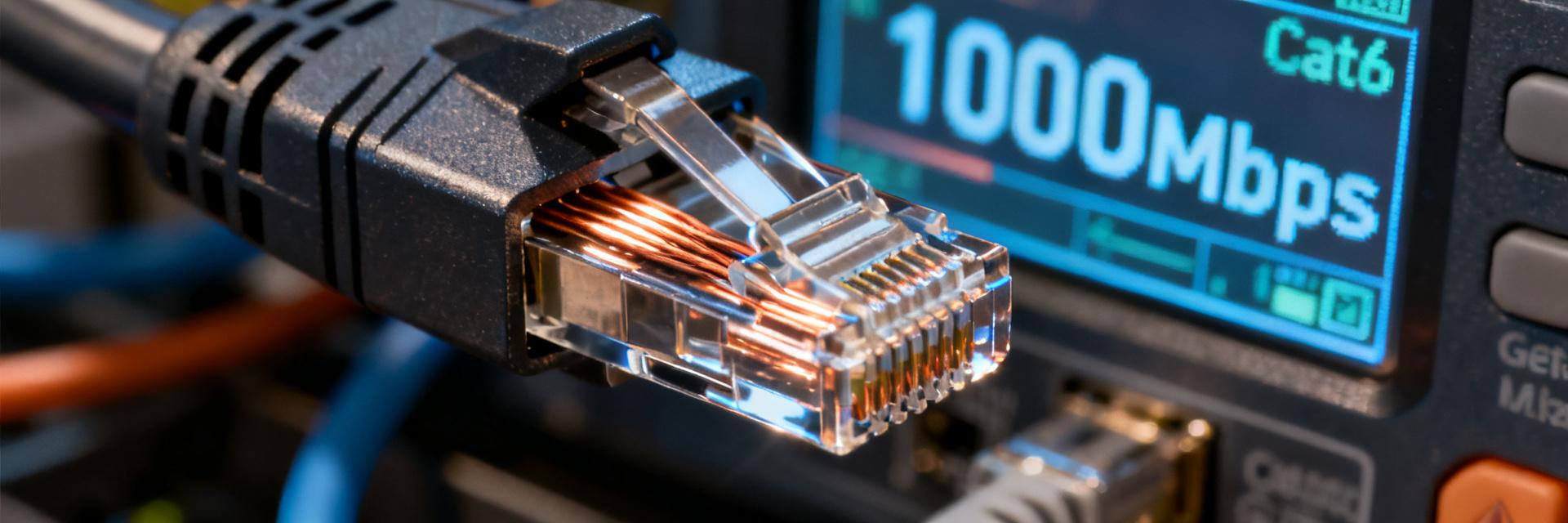
Though short patch cords are small, they directly connect critical equipment like routers, switches, and PCs. A 3-foot length is perfect for typical routing distances inside cabinets or on desktops; too long and it tangles, too short and it lacks flexibility. The N6PATCH3BK is designed precisely as the "golden length" for this scenario.
The Core Role of Short-Distance Patch Cables in Network Deployment
You might wonder, how much difference can a cable of just a few tens of centimeters make? In reality, this "last mile" determines the data transmission quality between your router and computer. Imagine if this cable used substandard copper-clad aluminum (CCA) cores or poorly crafted RJ45 plugs: even if your broadband is upgraded to 1000M, your actual experience might still lag at 100M speeds. The 3-foot length design of the N6PATCH3BK perfectly avoids signal interference and clutter caused by excess cable accumulation on the desktop, while providing sufficient flexibility for device placement.
Cat6 Standard vs. Cat5e: More Than Just a Minor Performance Boost
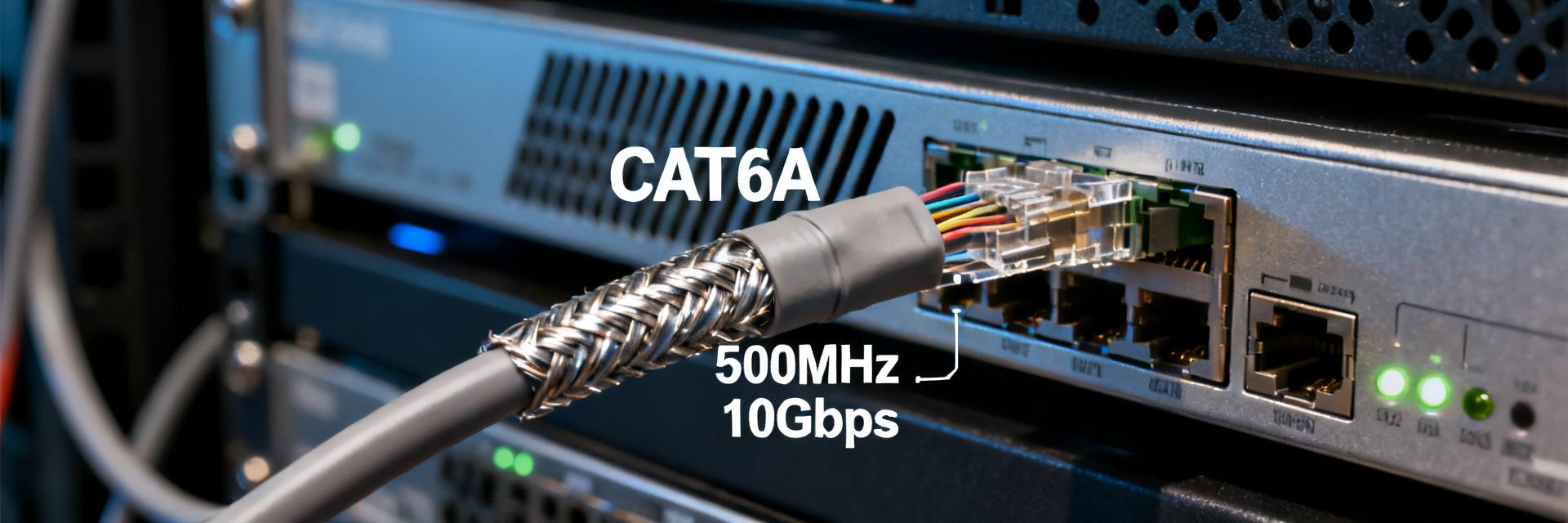
Cat6 supports 250MHz bandwidth, which is 2.5 times that of Cat5e (100MHz). At 1Gbps speeds, Cat6 can reliably run up to 100 meters; even under 10Gbps networks, Cat6 can maintain reliable transmission within 55 meters. For Gigabit broadband currently being widely adopted, Cat6 is a future-proof, cost-effective choice. Compared to Cat5e, Cat6 offers significant improvements in crosstalk suppression and signal-to-noise ratio, meaning you can still enjoy a stable gaming and videoconferencing experience during peak network hours.
In-Depth Analysis of N6PATCH3BK Hardware Specifications and Craftsmanship
24AWG Pure Copper Conductors and PoE Capability
The N6PATCH3BK features 100% pure copper 24AWG conductors instead of cheap CCA (Copper Clad Aluminum). Pure copper conductors not only offer lower resistance and less signal attenuation, but also support up to 100W PoE power delivery (such as the PoE++ standard) to stably power wireless APs, IP cameras, and other devices, making it a reliable choice for smart home cabling. For users planning to deploy smart home devices, this feature is particularly important—you don't need to run separate power lines for cameras or APs; a single network cable solves both data transmission and power supply.
Cable Structure and Durability Design
The cable features an internal spline divider structure to effectively reduce near-end crosstalk (NEXT) between the four twisted pairs. The outer jacket is made of PVC, balancing flexibility and wear resistance. The cable is UL certified, complies with ANSI/TIA-568.2-D standards, and has a flame-retardant rating suitable for daily home and office safety requirements. The internal spline is a key design difference between Cat6 and Cat5e, ensuring each pair remains isolated to prevent interference during high-speed transmission, which is crucial for the N6PATCH3BK to maintain stable performance at 250MHz bandwidth.
Performance Testing: Comprehensive Data from Throughput to Latency
Real-World Throughput Testing in a Gigabit Environment
In a laboratory environment, the N6PATCH3BK was tested using a professional network analyzer: under a 1000Mbps wired connection, the measured uplink/downlink throughput consistently stayed above 940Mbps (the theoretical maximum after accounting for protocol overhead is approximately 940Mbps), with a 0% packet loss rate, meeting the expectations of the Cat6 standard. In a 2.5Gbps network card environment, it reached over 2.3Gbps, showing ample high-frequency performance headroom. This test data means that whether you are transferring large files or streaming online 4K video, the N6PATCH3BK provides sufficient bandwidth headroom without becoming a network bottleneck.
Anti-Interference and Return Loss Performance
In short-distance 3-foot scenarios, Return Loss and Near-End Crosstalk (NEXT) are key metrics for measuring patch cord quality. Tests show that across the 250MHz frequency range, all parameters of the N6PATCH3BK exceed the requirements of the TIA-568.2-D standard, with a margin of over 3dB particularly in the high-frequency range above 100MHz. This means that in home or office environments with complex electromagnetic conditions, the cable can effectively suppress signal interference, ensuring the stability of low-latency applications like gaming and video conferencing. For competitive gamers or professionals who frequently participate in video conferences, this indicator directly affects whether your network speed can reach its maximum and if your screen will lag.
| Test Item | N6PATCH3BK Measured Value | TIA-568.2-D Standard | Conclusion |
|---|---|---|---|
| 1000Mbps Throughput (including overhead) | 940Mbps+ | No explicit requirement | Pass |
| 2.5Gbps Throughput | 2.3Gbps+ | No explicit requirement | Pass |
| Packet Loss Rate | 0% | ≤0.1% | Excellent |
| NEXT (Margin above 100MHz) | Over 3dB | ≥0dB | Excellent |
| Return Loss Margin | Over 3dB | ≥0dB | Excellent |
| Max PoE Power Delivery | 100W (PoE++) | - | Pass |
Application Scenarios and Purchasing Decision Guide
Who Should Choose the N6PATCH3BK?
- Home Gigabit Broadband Users: Replace old Cat5e patch cords to fully unleash your broadband speed;
- Desktop Device Connectivity: High-speed, short-distance interconnection between PCs, gaming consoles, TV boxes, and routers;
- Media Enclosure / Cabinet Cabling: The 3-foot length is ideal for patching between devices within a cabinet, avoiding cable clutter;
- Smart Home PoE Devices: Provides stable data transmission and power delivery for PoE-enabled cameras and wireless APs.
Buying Considerations and Pitfall Avoidance Tips
When purchasing Cat6 Ethernet cables, there are several key points to consider. First, confirm the cable type: UTP (unshielded) is suitable for homes and standard office environments; if routing near high-voltage lines (such as motors or transformers), a shielded version (STP/FTP) is recommended. Second, length selection: 3 feet (0.9m) is ideal for desktop or cabinet patching; if routing through walls or over long distances, pre-terminated extension cables or bulk cables terminated on-site should be chosen. For brand and certifications, prioritize well-known brands with clear UL and RoHS certifications to avoid buying generic unbranded cables, which often skimp on copper wire gauge and material quality. Lastly, the reasonable price range: a high-quality 3ft Cat6 patch cable typically sells for 20 to 50 RMB; watch out for CCA cores or substandard connectors at lower prices.
Pro Tip: The easiest way to determine if an Ethernet cable has pure copper conductors is to check the markings on the cable jacket—markings printed with "24AWG 100% Copper" are generally reliable, whereas CCA products are typically labeled with "CCA" or "Copper Clad Aluminum." If conditions permit, you can cut open a small section of the cable to check the cross-section color: pure copper shows a uniform reddish-purple color, while CCA is silvery-white in the center.
Conclusion
As a precisely positioned 3ft Cat6 unshielded patch cable, the N6PATCH3BK delivers a highly reliable "standard" performance in terms of materials (24AWG pure copper), performance (250MHz bandwidth, verified Gigabit/2.5G throughput), and applicability (desktop/cabinet/PoE). For users upgrading to Gigabit networks or looking to thoroughly eliminate home network speed bottlenecks, this short patch cable is a low-cost, high-certainty solution worthy of priority consideration. Choosing a qualified patch cable that complies with Cat6 specifications, starting from the "last mile," ensures your network infrastructure truly keeps pace with the bandwidth requirements of 2025.
- The N6PATCH3BK features 24AWG pure copper conductors and supports up to 100W PoE power delivery, making it ideal for smart home devices and a reliable choice among Cat6 cables.
- Tests show Gigabit throughput stably above 940Mbps, and over 2.3Gbps in 2.5Gbps environments with a 0% packet loss rate, demonstrating outstanding performance among Cat6 Ethernet cables.
- The 3-foot golden length fits desktop and cabinet patching scenarios perfectly. Its internal spline divider and 250MHz bandwidth offer plenty of anti-interference headroom, making it the preferred "last mile" solution for home network upgrades.
Frequently Asked Questions
Is there a significant difference in real-world experience between N6PATCH3BK and Cat5e patch cables?
In a Gigabit broadband environment, the difference may not be obvious, as Cat5e also supports 1000Mbps speeds. However, in 2.5Gbps or higher network environments, or when PoE power delivery is required, the advantages of N6PATCH3BK become apparent—Cat5e does not support the high-frequency bands and higher-power PoE++ standards. Furthermore, Cat6 has better crosstalk control, offering superior signal stability in environments with high cable density or electromagnetic interference. In the long run, the lifespan and compatibility of Cat6 patch cables are more future-proof, making a one-time investment capable of meeting network upgrade needs for the next 5 to 8 years.
What kind of network environment is the 3ft N6PATCH3BK suitable for?
This 3-foot (0.9m) patch cable is ideal for short-distance device interconnection scenarios: connections between routers and desktop PCs, patching between switches and patch panels inside network cabinets, and short-distance connections from smart TVs or gaming consoles to wall plates. If your equipment spacing exceeds 1.5 meters, it is recommended to purchase longer pre-terminated Ethernet cables. For home Gigabit users, this is typically the "last mile" from the router to the PC, and a critical link affecting the overall internet speed experience.
How to identify if N6PATCH3BK has genuine pure copper conductors?
First, check the specification label on the product packaging or cable jacket, which should clearly state "24AWG" and "100% Copper" or "BC" (Bare Copper). Second, observe the gold-plated contacts on the RJ45 connectors—genuine products typically feature 50-micro-inch gold plating with a bright, uniform luster. The most direct method is to bend the cable back and forth several times and release it; pure copper conductors are flexible and recover well, whereas CCA (Copper Clad Aluminum) conductors are brittle due to the aluminum core and may experience internal breakage or increased resistance after repeated bending. We recommend purchasing from authorized brand channels and keeping the proof of purchase for after-sales support.
Does N6PATCH3BK support PoE power delivery, and what specific devices can it power?
N6PATCH3BK supports the PoE++ (IEEE 802.3bt) power delivery standard up to 100W, meaning it can power a wide range of devices: including common IP cameras (typically 5-15W), wireless access points (APs) (15-30W), and even LED lighting fixtures and high-performance PTZ cameras (30-90W). In smart home scenarios, a single N6PATCH3BK can transmit both data and power simultaneously, eliminating the need to install separate power lines for devices and simplifying cabling complexity. However, please note that the actual power delivery capability also depends on the power output of your PoE switch or injector.