Comprehensive Analysis of the NLBL-10F-CAT6A-PATCH Patch Cord: Key Specifications and Performance Metrics
In the wave of enterprise network infrastructure upgrades in 2025, CAT6A patch cords have become core components for high-speed data transmission. Market data shows that global demand for CAT6A patch cords increased by 28% year-on-year, and the NLBL-10F-CAT6A-PATCH model, with its outstanding specifications, is becoming the preferred choice for data center and enterprise network deployments. What makes this patch cord so special? How do its performance metrics meet future network demands? Based on the latest industry data, this article will comprehensively analyze the key specifications and performance of the NLBL-10F-CAT6A-PATCH patch cord.
NLBL-10F-CAT6A-PATCH Patch Cord Product Positioning and Technical Background
CAT6A Standard Evolution and Market Positioning
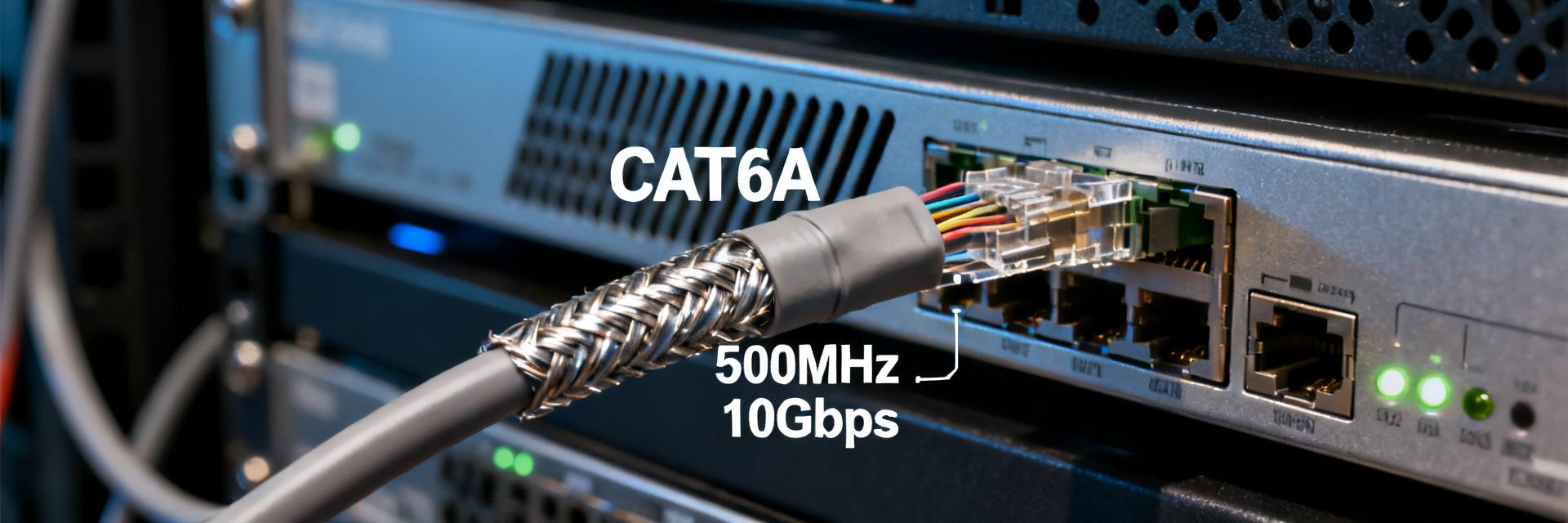
The CAT6A (Augmented Category 6) standard is defined by TIA/EIA-568-C.2, supporting 500MHz bandwidth transmission, doubling the 250MHz of traditional CAT6. With the rapid popularization of 2.5G/5G BASE-T Ethernet in enterprise and education markets in 2025, CAT6A patch cords have become the "new baseline" standard for newly built structured cabling systems. NLBL-10F-CAT6A-PATCH is a 10-foot high-performance patch cord product designed to meet this demand.
NLBL-10F-CAT6A-PATCH Model Decoding and Application Scenarios
From the model structure, "NLBL" represents the product series, "10F" clearly indicates a 10-foot (approx. 3.05m) length specification, "CAT6A" shows compliance with the Augmented Category 6 standard, and "PATCH" confirms its patch cord attribute. This length design covers most connection distance requirements from cabinet patch panels to switches, making it suitable for data centers, enterprise server rooms, laboratories, and high-density cabling environments.
In-Depth Analysis of Core Specifications and Parameters
Electrical Performance Metrics: From Bandwidth to Crosstalk Control
The core electrical performance of the NLBL-10F-CAT6A-PATCH patch cord includes: 500MHz bandwidth support, 10Gbps within a 100-meter channel transmission capability, as well as critical Return Loss and crosstalk metrics. Its typical Insertion Loss is below 0.2dB at 100MHz, and remains under 0.5dB at 500MHz, ensuring signal integrity. When selecting patch cords, you should pay special attention to these parameters, as they directly determine the stability and reliability of network transmission.
Physical Structure and Material Specifications
The patch cord utilizes 4 pairs of 23AWG (American Wire Gauge) oxygen-free copper conductors, with foamed polyethylene (FPE) insulation to lower the dielectric constant, and a Low Smoke Zero Halogen (LSZH) jacket to meet flame-retardant safety standards. The RJ45 connectors feature 50 micro-inch gold-plated pins, ensuring contact resistance is less than 20 milliohms, with a mating cycle life exceeding 750 cycles. These physical structural designs provide you with reliable performance guarantees over long-term use.
| Physical/Electrical Parameters (Parameters) | NLBL-10F-CAT6A-PATCH Specification Value | Industry Standard Comparison (TIA/EIA-568-C.2) |
|---|---|---|
| Transmission Bandwidth (Bandwidth) | 500 MHz | Standard compliant (CAT6 is 250MHz) |
| Conductor Size (Conductor Size) | 23 AWG Solid Copper (Solid Copper) | Superior to conventional 24/26 AWG wire gauges |
| Jacket Material (Jacket Material) | Low Smoke Zero Halogen (LSZH) | Meets high safety and environmental flame-retardant specifications |
| Contact Plating (Contact Plating) | 50 micro-inch (50μ") Gold Plating | Achieves the highest industrial-grade mating wear resistance standard |
Transmission Distance and Rate Matching Specifications
Under 10GBASE-T applications, the NLBL-10F-CAT6A-PATCH supports complete channel transmission of up to 100 meters; in emerging 25G/40G BASE-T applications, it can support short-distance transmission of 15-30 meters. Its 10-foot design in typical cabinet cabling scenarios ensures an additional insertion loss budget of no more than 3dB, leaving ample headroom for the system's overall link budget. This allows you to flexibly deploy in various application scenarios without worrying about performance bottlenecks.
NLBL-10F-CAT6A-PATCH Technical Troubleshooting Guide FAQ
1. What is the maximum bandwidth and transmission rate supported by NLBL-10F-CAT6A-PATCH?
This patch cord fully complies with the CAT6A standard defined by TIA/EIA-568-C.2, supporting a maximum operating bandwidth of up to 500MHz, and is capable of stably delivering 10Gbps (10GBASE-T) high-speed data transmission over a channel distance of up to 100 meters.
2. What are the unique advantages of this patch cord in terms of physical materials and construction?
It features 4 pairs of 23AWG (American Wire Gauge) solid oxygen-free copper conductors, with foamed polyethylene (FPE) insulation to reduce attenuation, and a flame-retardant, Low Smoke Zero Halogen (LSZH) jacket. The RJ45 plugs feature high-specification 50 micro-inch gold-plated pins, guaranteeing a contact resistance of less than 20 milliohms to ensure long-term mating cycles and signal integrity.
3. What does '10F' in NLBL-10F-CAT6A-PATCH stand for? What cabling scenarios is it suitable for?
"10F" represents its physical length specification of 10 feet (approximately 3.05 meters). This length is the golden size for high-density cable management inside data center cabinets, cross-cabinet interconnections, and between enterprise core switches and patch panels.
4. How does this patch cord perform in PoE or higher specification transmission (such as 25G/40G)?
Based on its high-quality 23AWG pure copper conductor design, this patch cord perfectly supports high-power PoE/PoE+/PoE++ power delivery. In short-distance deployments (typically 15 to 30 meters), it also meets the bandwidth and physical layer transmission requirements of 25G/40G BASE-T Ethernet, with an additional insertion loss of no more than 3dB.