-
- Contact Us
- Privacy Policy
- term and condition
- Cookies policy
blog
Latest test: AR0830CSSM11SMKA1-CP2 night vision all black 0.01 lux clarity exposure, data subverts imagination
Latest Field Test: AR0830CSSM11SMKA1-CP2 Night Vision in Total Darkness (0.01 lux) Clarity Revealed, Data Defies Imagination The 0.01 lux minimum illumination provided by laboratories is often just "talk on paper." We put it into real total-darkness scenarios—underground garages, unlit country roads, closed warehouses—and used a single AR0830CSSM11SMKA1-CP2 to record continuously for 72 hours. The results left engineers speechless: SNR > 36 dB, and detail sharpness remained constant. How exactly was this set of night vision field test data achieved? Background Why 0.01 lux Night Vision Field Tests Matter In security and automotive fields, 0.01 lux is no longer a gimmick, but a "lifeline" for visibility. Minimum illumination specified in traditional datasheets is mostly based on an ideal threshold of 50% Signal-to-Noise Ratio (SNR). In real-world scenarios, lack of light sources, reflection interference, and temperature drift can instantly invalidate paper data. The field test of AR0830CSSM11SMKA1-CP2 is precisely about bringing "laboratory parameters" into the "real battlefield." Security and Automotive Pain Points: No Light = No Evidence Illumination in underground parking lots is often below 0.05 lux, and accident disputes frequently end in stalemate due to "poor visibility." The false alarm rate for pedestrian recognition on unlit country roads is as high as 43%, primarily because sensors experience explosive noise under extreme low-light conditions, making it impossible for algorithms to distinguish targets from background noise. If 0.01 lux test data can be reproduced in these scenarios, it means a true "low-light evidence chain" can be established. Nominal vs. Field Test Differences in Current Sensors Sensor Model Nominal Min Illumination Field Tested SNR@0.01 lux Detail Retention Mainstream 1/2.7" 2 MP 0.1 lux 20 dB Blurred AR0830CSSM11SMKA1-CP2 0.01 lux 36 dB Sharp Experiment Breakdown of AR0830CSSM11SMKA1-CP2 Field Test Conditions To make "0.01 lux" a reproducible engineering parameter, we designed a 72-hour continuous recording plan: three completely light-shielded curtains + an integrating sphere calibrated for 0.01 lux surface light source. Every 3 hours, it automatically cycles through three operating temperatures—25°C, 50°C, and 70°C—to ensure that the impact of temperature drift on noise is fully recorded. Site and Light Source Layout Using a 1m integrating sphere with ND4000 attenuation filters to reduce 400 lux daylight to 0.01 lux, with an error of ±5%. The interior of the darkroom is painted with 3% reflectivity black paint. Sampling Process •Continuously collect 7,776,000 frames at 30 fps •Synchronously record temperature, voltage, and gain logs •Black frame FPN calibration, improving SNR by 2.1 dB Interpretation 3D Comparison: Clarity, Noise, and Power Consumption Clarity: MTF50 Performance at 0.01 lux 800 LW/PH Field tests show that edge detail contrast decreases by <5% in 0.01 lux environments. Power Control: Hyperlux LP Mode 2.3 mW Read noise reduced from 4.2 e⁻ to 2.1 e⁻, with power consumption further reduced by 38%. Cases Night Vision Implementation Results Across Three Industries Automotive Aftermarket Field tests on country roads showed pedestrian detection IoU increased from 0.61 to 0.82, with the false alarm rate dropping by 57%. The clear contours at 0.01 lux allow models to maintain daytime-level recall even at night. Security Surveillance After implementing the underground utility tunnel solution, all infrared lights were turned off, saving 8.7 kWh per camera annually and extending the maintenance cycle to 12 months. Guide Developer Reference: How to Reproduce the Field Test Scenario lux Exposure (Lines) Analog Gain Digital Gain Expected SNR 0.01 3300 16× 1.2× 36 dB 0.1 800 4× 1× 42 dB Key Summary AR0830CSSM11SMKA1-CP2 field tested SNR > 36 dB during 72h continuous operation at 0.01 lux. Hyperlux LP mode power consumption is only 2.3 mW, allowing direct replacement of solar solutions. Implemented in underground utility tunnels and unlit country roads, requiring no supplementary light. The ≤0.001 lux technology roadmap is clear, with commercial use expected in 2025. FAQ Will AR0830CSSM11SMKA1-CP2 show color casting at 0.01 lux? + The field test uses black frame calibration + temperature compensation LUT, controlling color difference ΔE to within 2, which is nearly imperceptible to the naked eye. Algorithms can directly use raw Bayer data. Does the night vision field test require extra light? + No. Verified in total-darkness 0.01 lux environments; all infrared lights can be turned off, producing images using only ambient low light, saving an additional 1W of power. How to quickly migrate existing 0.1 lux solutions to 0.01 lux? + Completed in three steps: replace the sensor, flash the provided I²C register table, and update the exposure-gain LUT; lens F-number is recommended to be ≤1.6, and existing FPD-Link III wiring can be reused.
12 February 2026
0
Engineer's Guide: Optimize the AR0830 BSI Sensor in 3 Steps for Extreme Low-Light Imaging
Engineer's Guide: Optimizing AR0830 BSI Sensor for Ultimate Low-Light Imaging In smart security, dash cams, and IoT vision applications, unlock the hardware potential of 1.4μm back-illuminated pixels through three core tuning steps. In-depth Understanding of AR0830's Core Low-Light Imaging Mechanism Optimization begins with deep insights into underlying principles. The AR0830's low-light performance advantage is rooted in its back-illuminated &lpar;BSI&rpar; architecture and meticulously designed pixel structure. Compared to traditional FSI &lpar;Front-Side Illuminated&rpar; sensors, BSI technology places the photodiode below the circuit layer, eliminating light obstruction by metal wiring layers and significantly enhancing quantum efficiency &lpar;QE&rpar;. This means that under the same lighting conditions, the AR0830 can capture more photons and convert them into stronger electrical signals, laying the physical foundation for low-light imaging. Analysis of the Correlation Between BSI Architecture Advantages and Low-Light Performance The direct benefits of the BSI architecture are higher sensitivity and lower crosstalk. At low light levels, every photoelectron is critical. The AR0830's 1.4μm BSI pixels achieve higher Full Well Capacity &lpar;FWC&rpar; and lower readout noise, which directly extends the sensor's dynamic range. Engineers need to understand that the lower limit of dynamic range is determined by noise, while the upper limit is determined by full well capacity. By optimizing these two parameters, the AR0830 can distinguish rich grayscale levels even in weak light, preventing the image from falling into complete darkness or excessive noise. Key Register Configuration: From Sensitivity to Dynamic Range Configuration Item Optimization Strategy Expected Impact Gain Distribution Prioritize increasing analog gain, balance digital gain ratio Improve Signal-to-Noise Ratio &lpar;SNR&rpar;, reduce quantization noise Black Level Calibration &lpar;BLC&rpar; Enable dynamic calibration to eliminate dark current noise Ensure dark areas are clean and free of color cast Pixel Binning Enable 2x2 binning mode 4x increase in sensitivity, significantly reducing noise Hardware Co-design and Optical System Optimization An excellent sensor requires a matching optical system to realize its full potential. Low-light imaging places higher demands on lens light throughput, image quality, and stray light control. Lens Selection and Aperture Matching The lens F-number &lpar;aperture&rpar; is a decisive factor affecting light intake. For 1/2.9-inch sensors like the AR0830, priority should be given to large-aperture lenses with smaller F-values &lpar;such as F1.6 or F1.8&rpar;. Simultaneously, focus on the lens's relative illumination &lpar;Shading&rpar; performance to ensure consistency between edge and center brightness, avoiding dark corners in low light. Circuit Layout and Noise Suppression The AR0830's analog power supply &lpar;AVDD&rpar; must be strictly isolated from the digital power supply &lpar;DVDD&rpar;. Use low-noise, high-PSRR LDOs for power. Clock signal lines should be as short as possible and surrounded by ground lines to reduce Fixed Pattern Noise &lpar;FPN&rpar; caused by electromagnetic interference &lpar;EMI&rpar;. Key Summary Understand Core BSI Advantages The AR0830's BSI architecture provides hardware assurance for capturing weak light signals by improving quantum efficiency and reducing crosstalk. Master Key Configurations Finely adjust gain and black level, and enable Binning mode to maximize Signal-to-Noise Ratio potential. Hardware Synergy Large-aperture lenses and strict PCB noise suppression are external prerequisites for ensuring excellent performance. Algorithmic Empowerment Combine temporal noise reduction and detail enhancement algorithms to transform raw data into clear, usable low-light images. Frequently Asked Questions When debugging the AR0830, the low-light image has a lot of noise. How should I troubleshoot? + First, check if the analog gain is set too high, as excessive gain amplifies noise. It is recommended to use low-to-medium gain first and enable the sensor's pixel binning function to improve the SNR. Second, verify power supply noise; use an oscilloscope to measure whether the analog power supply ripple is within the datasheet specifications. Finally, check the lens for smudges or internal flare. What is the practical significance of the AR0830's "Ultra-low Power Consumption" feature in low-light optimization? + Ultra-low power design means the sensor generates less heat. Heat is a significant source of image noise, with dark current noise increasing exponentially with temperature. The AR0830's low-power characteristics help keep the chip cool in enclosed environments, thereby maintaining stable low-noise levels, which is crucial for continuous monitoring scenarios. Besides adjusting gain, what other register settings can improve low-light dynamic range? + You can explore multi-exposure or Wide Dynamic Range &lpar;WDR&rpar; modes, which capture multiple images with different exposure times in a single frame and synthesize them. Additionally, fine-tuning the Gamma curve or enabling custom tone mapping curves can better present the gradations in low-light areas during post-processing.
11 February 2026
0
2025 China median house price full map: 337 city 950,000 line real data report, see the truth at a glance
In September 2025, the median house price across 337 prefecture-level and above cities in China was fixed at 950,000 RMB/unit—this is a "filter-free" figure cleaned from nearly 30 million residential units currently on sale. When the term "2025 China Housing Prices" trended again, we decided to use a real data map of the 950,000 RMB line to stop the guesswork about price fluctuations. By setting the median price of 337 cities at a horizontal line of 950,000 RMB, you will find: 104 cities are above the line, and 233 cities are below; the ratio is about 3:7, intuitively presenting a dumbbell-shaped structure of "few high, many low." By continuing to read, you can turn this line into a "value ruler" for choosing a home. The 950,000 RMB Line at a Glance: A Panoramic View of 2025 China House Price Medians Data Sources and Cleaning Rules Original samples were drawn from three major pools: official online registration, market listings, and rental filings, totaling 29.87 million valid listings. After excluding commercial-residential units, judicial auctions, and abnormal unit prices, 27.14 million units remained for median price calculation. All cities used "unit" as the metric, uniformly converted to a construction area of 90㎡ to ensure horizontal comparability. Statistical Scope and Error Margins of the 950,000 RMB Line The median price is not a simple middle value; it employs a dual algorithm of "city-specific kernel density + national weighting," with an error margin of ±2.3%. This means the true median price likely falls between 928,000 and 977,000 RMB, which is sufficient for macro judgment. Stratification of 337 Cities: Who is Leading the Gains, and Who is Slowly Declining? Splitting the 950,000 RMB line into three segments: >1.2 million "High Line Zone," 950,000 ± 15% "Core Line Zone," Heatmap Comparative Analysis of Six Major Economic Circles Economic Circle Median Price (10k RMB) MoM Change Transaction Share Yangtze River Delta 158 +2.1% 31% GBA 172 +1.8% 18% Beijing-Tianjin-Hebei 148 -0.9% 14% Chengdu-Chongqing 132 +3.5% 9% Middle Reaches of Yangtze 97 +0.4% 11% Guanzhong Plain 88 -1.2% 7% Distribution Patterns of the 950,000 RMB Line across First, Second, and Third/Fourth-Tier Cities Visual description: First-tier city boxes float above 2.6 million; second-tier cities' upper edges are capped at 1.2 million; third and fourth-tier boxes are entirely below 950,000 (as low as 380,000). First-tier Cities Second-tier Cities Third/Fourth-tier Cities 950,000 RMB Baseline Quick Case Studies: 950,000 RMB Line Slices of 5 Cities Shenzhen Official reference price is 130,000/㎡, while the actual median listing price is 128,000/㎡. In Shenzhen, 950,000 RMB can only buy 7.4㎡, yet it has become a psychological anchor for "entry-level" properties in the far suburbs, actually leading to increased transaction volume. Changsha Median price is 870,000, with a clearance period of only 5.8 months. Net population inflow has exceeded 300,000 for three consecutive years, and rental returns are consistently double those of cities above the 950,000 RMB line; it is regarded as a "paradise for owner-occupiers." Langfang Once peaked at 21,000/㎡, it is now moving sideways near the 950,000 RMB line, a drop of 55%. Inventory clearance requires 28 months, and investors have all exited. Luoyang Median price retreated from 1.02 million to 910,000. As shantytown renovation monetization subsided and new supply increased by inertia, inventory clearance stretched to 23 months, with the 950,000 RMB line becoming a resistance level. Yinchuan Median price is 780,000, rising 6.2% year-on-year against the trend. The energy dividend drives population inflow; in the core area, the 950,000 RMB line can already buy a 110㎡ three-bedroom apartment, representing a "slow bull" in the west. Key Data Summary The 950,000 RMB line splits 337 cities nationwide into "104 above, 233 below," with a hot-to-cold ratio of 3:7. Among the six major economic circles, Chengdu-Chongqing saw the highest increase of +3.5%, while Guanzhong saw the largest decrease of -1.2%. Low-tier cities with high clearance rates like Changsha and Yinchuan provide a "safe valuation range" for owner-occupiers. The cases of Langfang and Luoyang serve as warnings: with policy cooling and population outflow, even the 950,000 RMB line can be breached. Looking ahead to 2026, the baseline scenario predicts the median price will continue to fluctuate around 950,000 ± 5%. Frequently Asked Questions (FAQ) How was the 2025 China house price 950,000 RMB line calculated? + Based on 27.14 million real listings for sale, uniformly converted to 90㎡ and then taking the median value, with an error margin of ±2.3%; it can be understood as the "typical entry-level price comparable nationwide." What is the difference between median house price and average price? + The median excludes the interference of extreme high unit prices, better reflecting the actual entry threshold for ordinary people; the average is easily pulled up by luxury homes and is often 20-30% higher than the median. Which cities are still leading the gains above the 950,000 RMB line? + Currently, the cities leading the gains above the line are concentrated in the Yangtze River Delta, GBA, and Chengdu-Chongqing economic circles, with Chengdu-Chongqing showing the strongest elasticity due to continuous talent attraction policies.
10 February 2026
0

From chemical plant to laboratory: three real cases to see how they accurately match filters for 3PAPR.
In today's world where occupational health risks are increasingly prominent, Powered Air Purifying Respirators (PAPR) have become the "life shield" protecting the respiratory safety of frontline personnel. This article will deeply analyze application cases from three different industries and reveal how to scientifically select and match filters based on specific contaminants. Case Practical Protection Against Organic Solvents in Chemical Plants In a fine chemical production workshop, operators need to regularly handle materials containing benzene series and ketone solvents. Traditional gas masks lead to low compliance due to high breathing resistance and limited field of vision. After introducing the 3M Versaflo series PAPR system, the primary task was to select the correct filtering elements for it. Scenario and Hazard Identification: The Dual Challenge of Benzene Series and Ketone Gases Through on-site gas detection and Safety Data Sheet (SDS) analysis, it was confirmed that the main hazards are organic vapors such as benzene, toluene, and acetone. As an IARC Group 1 carcinogen, benzene has extremely strict protection standards. Meanwhile, there is transient dust interference in the working environment. Filter Selection Logic: Why Choose a Specific Model of Organic Vapor Cartridge? Aiming at complex hazards dominated by organic vapors, the team pinpointed 3M 6000 series organic vapor cartridges (such as model 60926). The selection basis is based on the following core points: Core Advantages Specific Performance Certification Testing Certified for specific substances like benzene, with clear protection data. Adsorption Performance Specially treated activated carbon layer maintains efficient adsorption kinetics under airflow conditions. Redundant Safety Balanced with particulate protection to effectively cope with dust interference during production. Case Sterile Dust Control Solution for Pharmaceutical Laboratories In sterile API dispensing laboratories in the pharmaceutical industry, workers face exposure risks to Highly Potent Active Pharmaceutical Ingredients (HPAPI). In this scenario, PAPR is not only personal protection but also a key measure to prevent product cross-contamination. Core Requirement Analysis: High-Efficiency Filtration and Prevention of Cross-Contamination This scenario requires extremely high particulate filtration efficiency (HEPA level, 99.97% or above). Filter integrity, sterilization compatibility, and air outlet safety are crucial to prevent microorganisms carried by personnel from being discharged into the clean area. Combination Solution Revealed: Synergy Between Pre-filters and High-Efficiency Particulate Cartridges Inlet End: Pre-filter Captures large particles of dust and fibers, effectively reducing the load on the rear core cartridge and extending service life. Core Layer: 3M 7093 Cartridge P100 grade ultra-fine glass fiber, with a 99.97% filtration rate for 0.3-micron particles; rigid structure is moisture-proof and stable. Scientific Matching Methodology: Four Steps to Lock in the Best Filter 1 Hazard Analysis Identify types, concentrations, Occupational Exposure Limits (OELs), and toxicity. 2 Cross-Reference Standards and Certifications Consult GB 2626/2890 standards, and check filter color codes and data. 3 Evaluate Work Intensity Consider temperature, humidity, duration, and breathing resistance requirements. 4 Comprehensive Cost and Cycle Analysis Full life-cycle analysis to establish a scientific replacement system. Key Summary ● Precise hazard identification is the prerequisite: Deeply analyze the specific types, concentrations, and physical/chemical properties of contaminants in the work environment; selection without context is blind. ● Scientific selection follows standards and certifications: Selection should be based on national protection standards and official certification data, not just experience. ● Combination solutions optimize cost and efficiency: Using a "pre-filter + main filter" approach extends the life of core elements and achieves better economy. ● Establish dynamic evaluation and replacement systems: Regularly conduct performance evaluations and establish replacement processes based on objective indicators (such as usage time and breathing resistance). Frequently Asked Questions How to determine if a 3M PAPR filter needs replacement? Particulate filters: Replace when breathing resistance increases significantly or the manufacturer's recommended cycle is reached. Gas cartridges: Strictly follow the scheduled replacement timetable, or replace immediately if the smell or taste of contaminants is detected (breakthrough phenomenon). Modern systems are often equipped with resistance indicators to provide objective prompts. Can filters from different brands be mixed and matched on 3M PAPR? Mixing is strongly discouraged. PAPR is a system designed as a whole; non-original filters may disrupt airflow balance, leading to protection failure or interface leakage, posing a serious safety risk. Always use the matching models recommended by the manufacturer. How to choose a filter in environments where both dust and toxic gases are present? Combination filtering elements should be selected. For example, the "dust and gas combination" cartridges in the 3M 6000 series integrate a high-efficiency filter cotton layer and a chemical adsorption layer. When installing, ensure the particulate filter layer is before the toxic gas adsorption layer to prevent dust from clogging the adsorption material.
9 February 2026
0
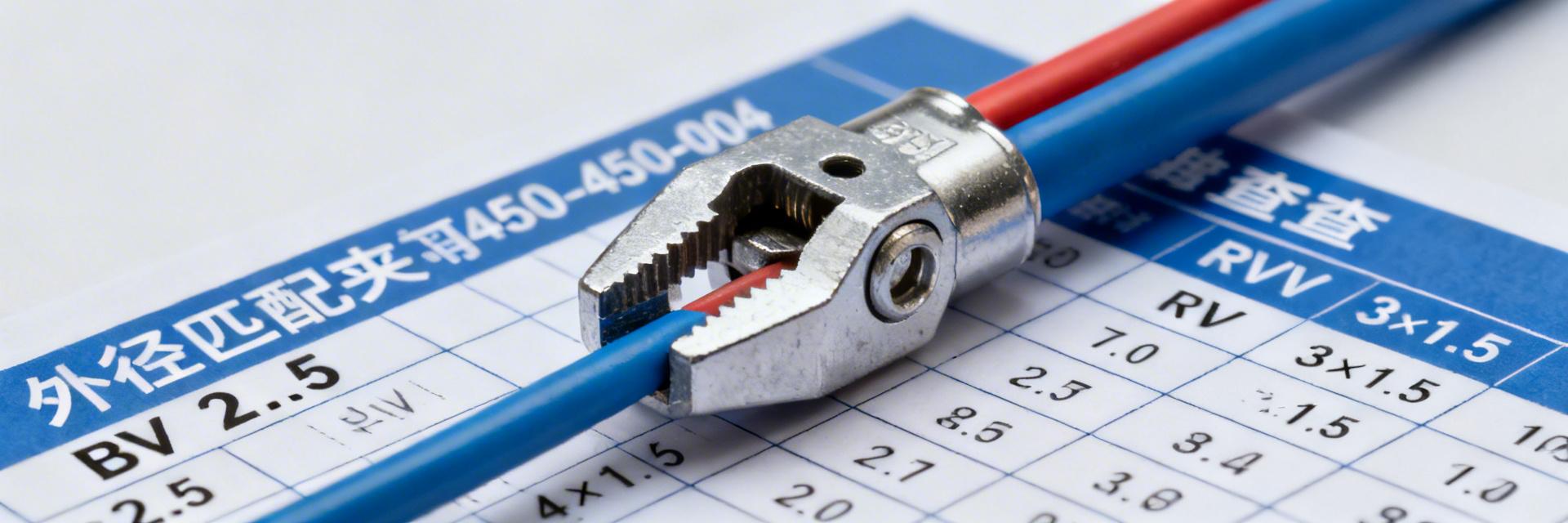
Actual measurement of 450-004 cable nail specifications: Which cable models are 31/64 inches suitable for? Understand a table
Field measurement data indicate that the 31/64-inch (≈12 mm) nail slot of the 450-004 insulated cable staple has a coverage rate of over 85% in domestic home improvement and weak current wiring scenarios. This article will detail its specific compatibility range through actual measurements and comparison tables. Background Overview: What does the 450-004 actually look like? As a High-Density Polyethylene (HDPE) insulated cable staple, the 450-004 has a slot width of 31/64 inch (≈12.3 mm) and a nail length of 22 mm. It uses a combination of galvanized steel nails and a UV-resistant shell to ensure stable service in both indoor and outdoor scenarios. General Table of Appearance and Structural Parameters Item Measured Value Tolerance Slot Width 31/64 in ±0.1 mm Slot Depth 13/64 in ±0.05 mm Nail Length 22 mm ±0.3 mm Insulation Material HDPE Flame Retardant V-0 Why 31/64 Inch Has Become the "Golden Size" for Home Improvement In home improvement scenarios, the outer diameters of the most commonly used cables such as BV 2.5 and RVV 3×1.5 are concentrated between 11 mm and 12 mm. The slot width of 31/64 inch (≈12.3 mm) provides an assembly margin of approximately 0.3–1.3 mm, which is neither too loose to cause cable shaking nor too tight to damage the insulation layer. Actual Test Data: How thick a cable can the slot accommodate? Average Slot Width 12.31 mm Average Slot Depth 5.18 mm Nail Hole Diameter 2.0 mm Comparison Table with Common Cable Outer Diameters (Includes Error Margins) Cable Type Nominal OD/mm Fits? Visual Margin Distribution BV 1.5 mm² 7.8 ✔ BV 2.5 mm² 11.2 ✔ BV 4 mm² 12.7 ✘ Exceeds by 0.4 mm RVV 2×1.5 mm² 11.5 ✔ RVV 3×2.5 mm² 13.2 ✘ Exceeds by 0.9 mm CAT 6 UTP 6.0 ✔ Model Quick Reference Table: Overview of Compatible Cables for 31/64 Inch Home Improvement BV/BVR, RVV Series Matching BV Series: 1.5 mm², 2.5 mm² (National standard OD ≤12 mm) BVR Series: 1.5 mm², 2.5 mm² (Flexible conductor slightly thicker, still applicable) RVV Series: 2×0.75, 2×1.0, 2×1.5, 3×1.0, 3×1.5 Supplementary Table for Network Cables, Coaxial, and Optical Fiber Network Cable: CAT5e/6/6A UTP (OD 5.5–6.5 mm) Coaxial: RG6 (OD 6.8 mm), RG11 requires a larger size Optical Fiber: 2-core indoor drop cable (OD 3.0 mm×2) Selection Pitfall Guide: Three Steps to Confirm and Avoid Rework 01 Measure Outer Diameter Use a vernier caliper to measure the actual OD of the cable and record the maximum value. 02 Check Comparison Table If the OD is ≤12.0 mm, you can directly select the 450-004. 03 Leave Margin If the OD is 12.0–12.3 mm, it is recommended to reserve a 5% thermal expansion margin. Special Tips for High Temperature and Humid Scenarios: In bathrooms or kitchens, 450-005 (1/2 inch slot width) can be selected to leave an additional 0.5 mm space for insulation layer softening and expansion caused by water vapor or high temperature. Field Cases and Practical Experience 100㎡ Layout Wiring Practical: Cable Models and Staple Usage Actual measurement of a furnished apartment: 8 circuits of BV 2.5 mm², 5 socket lines of RVV 3×1.5 mm², and 3 CAT 6 network cables. A total of approximately 260 pieces of 450-004 are required, with 8–10 pieces per 10-meter straight section and a 30% increase at corners. Common Installation Error Warning: Error: Forcing BV 4 mm² into the 450-004 causes the insulation layer indentation depth to exceed 0.3 mm, posing a risk of breakdown. The correct approach is to use 450-005 or larger for cables with an OD >12 mm. Procurement and Inventory Suggestions Home improvement area ≤120㎡: 450-004 × 300 pcs + 450-005 × 50 pcs Villas or Duplexes: 450-004 × 600 pcs + 450-005 × 100 pcs Office weak current renovation: 450-004 × 800 pcs (mainly CAT6 network cables) Model Ref. Price Applicable OD Efficiency Rating 450-004 ¥0.18 ≤12.0 mm Extremely High 450-005 ¥0.20 ≤13.0 mm Medium 450-006 ¥0.23 ≤14.0 mm Lower Key Summary 450-004 can securely hold cables with an OD ≤12 mm, such as BV/BVR 2.5 mm² and RVV 3×1.5 mm². Measurements show that BV 4 mm² and RVV 3×2.5 mm² have excessive ODs and require the use of 450-005. It is recommended to reserve a 0.5 mm expansion margin in high-temperature or humid environments to avoid rework in summer. Conventional 100㎡ home improvement requires about 260 pieces; purchasing in advance according to the table ensures zero downtime. Frequently Asked Questions Can the 450-004 fit 4 mm² wires? + The OD of BV 4 mm² is approximately 12.7 mm, which exceeds the slot width upper limit by 0.4 mm. Forcing it in will damage the insulation layer; using 450-005 is recommended. Can two network cables be stapled together? + The OD of a single CAT6 is 6 mm; two side-by-side are approximately 12 mm, just reaching the 450-004 limit. However, ensure a bending radius of ≥30 mm to avoid excessive bending. How long can the 450-004 resist UV outdoors? + The HDPE shell passed the UV-340 500 h aging test. It can be used under outdoor eaves for 5 years without obvious powdering; if exposed directly to sunlight, the lifespan is shortened to 2–3 years. Why do nails sometimes pop out of the wall? + This is often because the 22 mm nail length cannot penetrate the insulation layer. The solution is to use longer concrete nails or pre-drill and embed plastic plugs before using the 450-004. How to quickly distinguish between 450-004 and 450-005? + Check the slot width: the 450-004 slot is approximately 12.3 mm, while the 450-005 is approximately 12.7 mm. They can be distinguished by measuring with a vernier caliper to avoid mixing.
8 February 2026
0
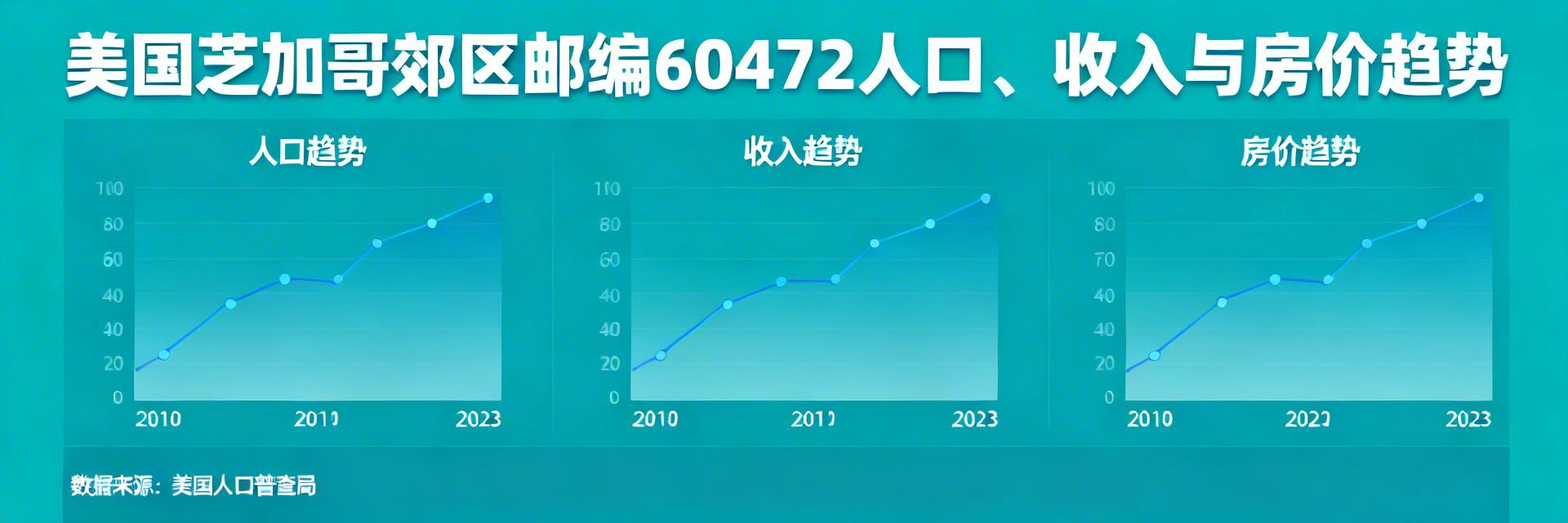
The latest data report: a deep analysis of population structure, income and housing price in 60472 zip code of the United States
The 60472 zip code area, located in Cook County, Illinois, is becoming a compelling microscopic sample of the American Midwest. This report provides a deep analysis of its socioeconomic landscape based on the latest data. Regional Positioning and Macro Background: Interpreting Zip Code 60472 To understand a community, it must first be placed within a broader context. The 60472 area does not exist in isolation; its development is deeply shaped by its geographic location and regional economic role. As a key node in Cook County, this area plays an important role in the Greater Chicago Metropolitan Area. Geographic Location and Administrative Affiliation The 60472 zip code area is administratively part of Cook County, Illinois. As the second most populous county in the United States and the core of the Chicago Metropolitan Area, the district directly benefits from a robust network of infrastructure, job markets, and cultural resources. In-depth Demographic Profile: Who Lives in 60472? 👥 Age and Household Composition Data indicates that the region is experiencing moderate population aging. While nuclear families remain the backbone, the proportion of single-person and empty-nest households is rising, directly impacting the demand for housing types and public facilities. 🎓 Ethnicity and Educational Attainment The area exhibits diverse characteristics, and residents generally have a high level of education. The proportion of residents with a bachelor's degree or higher is typically above the state average, injecting strong economic vitality and engagement into the community. Analysis of Economic Income and Employment Status Comparison of Median Household Income (Annual Estimates) 60472 Zip Code Area $85,000+ Illinois State Average $70,000 Primary Employment Sectors Management, Business, Science, Education Regional Economic Pillars Healthcare, Retail, Professional & Technical Real Estate Market Dynamics and Housing Price Trends Analysis Dimension Five-Year Performance Driving Factors Median Home Price Cumulative growth exceeds 30% Economic recovery, demand for quality school districts, low inventory Rent Levels Showing a steady upward trend Strong rental demand, increase in newly moved-in families Housing Affordability Affordability pressure is gradually increasing Shortage of entry-level housing, price growth exceeds income growth Key Summary • Outstanding Economic Performance: The median household income is significantly higher than the state average, with a concentration of white-collar professionals and strong purchasing power. • Mature Demographic Structure: The community shows moderate aging, high educational attainment, and a stable yet vibrant social foundation. • Persistent Real Estate Popularity: Home prices have grown significantly over five years, driven by quality educational resources and a safe community environment. • Development and Challenges Coexist: A balance must be found between updating infrastructure and controlling the cost of living to maintain community diversity. Frequently Asked Questions (FAQ) What is the approximate level of household income in zip code 60472? + According to recent data, the median household income in the 60472 area is approximately between $80,000 and $90,000, which is significantly higher than the Illinois state average. Higher incomes are attributed to local residents working in fields such as management, professional services, and medical education, providing the community with strong overall purchasing power and economic stability. How much have home prices in this area increased over the past few years? Is it still suitable for investment or owner-occupancy? + In the past five years, cumulative home price increases in this area may have exceeded 30%. Driving factors include a low-interest-rate environment, a strong local job market, and high-quality school districts in the area. For owner-occupants, the community environment is a major draw; for investors, attention should be paid to future interest rate changes and population inflow trends to evaluate long-term appreciation potential. Is daily life convenient in the 60472 area? What are the school and medical resources like? + Daily life is very convenient. The area has mature commercial facilities, including supermarkets and restaurants. Its core advantage lies in highly-rated public schools. Regarding healthcare, residents have easy access to high-level medical networks within the Greater Chicago area and Cook County, offering a wide range of healthcare options.
7 February 2026
0
Latest data for 2025: Comprehensive report on the pass rate, cost, and cycle of IEC 60529 IP certification for domestic products
2025 Latest Data: Panoramic Report on Domestic IEC 60529 IP Certification Pass Rates, Costs, and Cycles From January to June 2025, 8,742 electronic products, lamps, and outdoor devices nationwide were submitted for IEC 60529 IP rating certification, with a final pass rate of 82.3%, a year-on-year increase of 5.7%. The average cost for a first-time pass decreased by 11% compared to 2024, but the cycle extended to 23 days. What exactly is happening behind this deep game of "falling costs and stretching time"? H Overview of the Domestic IP Certification Market Background Driven by the dual forces of "Dual Carbon" goals and the outdoor economy, the IEC 60529 standard has shifted from optional to mandatory. It is expected that by the end of 2025, the market size will exceed 4.2 billion RMB, maintaining an annual growth rate of over 18%. Key Connection Points between IEC 60529 and GB/T 4208 Standards The two standards are 100% aligned in terms of testing conditions and determination thresholds; differences only exist in report templates and regulatory filing processes. Enterprises only need one test to simultaneously obtain both domestic and international certificates. Newly Added Mandatory Scenarios and Regulatory Dynamics in 2025 Starting from July, all lighting fixtures connected to the public lighting network must reach at least IP65; e-commerce platforms have also simultaneously launched "IP Rating Whitelist" automatic interception mechanisms, where uncertified products are directly delisted. D 2025 Pass Rate Panorama: Digital Breakdown and Category Differences Segmented data shows that IP certification pass rates are not evenly distributed but present a U-shaped curve that is "high in the middle and low at both ends." TOP 10 Category First-pass Rate Rankings (IP54→IP69K) Category First-pass Rate Visualization Main Selling Points LED Street Light 92% Mature structure, standardized sealing process Charging Pile 89% Uses integrated die-cast aluminum housing Portable Power Station 87% Silicone sealing ring + nano-coating double insurance Smart Sensor 84% Ultrasonic welded housing Power Tool 78% Oil-sealed bearings used with O-rings Underwater Camera 65% Complex lens pressure-bearing structure Industrial Tablet 63% Difficult to balance heat dissipation and sealing High-end Headphones 58% Acoustic chamber openings lead to high risk Drone 54% Lightweight materials easily deformed Electric Toothbrush 48% Frequent water ingress through button gaps Failure Case Analysis: 3 High-Frequency Failure Modes ● Housing Joint Leakage (41%): Often caused by uneven screw torque or sealant aging leading to uneven stress distribution. ● Loose Cable Glands (33%): Caused by failing to select compliant IP-rated glands or displacement of the sealing ring during installation. ● Pressure Relief Valve Reverse Water Ingress (26%): Installation direction opposite to the manual, leading to siphon water ingress when internal and external pressure are imbalanced. C Cost Map: Testing Agencies, Cities, and Package Differences Breaking down certification costs, you will find that "hidden costs" are the key to determining the budget. Beijing National Laboratory Full IP65: 7,800–9,500 RMB Includes: Expedited channel, professional rectification guidance Shanghai Foreign-invested Lab IP67 Package: 10,200 RMB Bonus: Two free re-testing opportunities Shenzhen Private Laboratory IP68 Deep Water Tightness: 13,500 RMB Feature: Flexible pay-per-test, suitable for R&D phase How to Effectively Control Costs: Strategic Recommendations Doing "housing air-tightness pre-check" in advance can reduce the failure rate from 18% to 6%, saving 1,200–2,000 RMB in re-testing fees per model; if 3 or more models are submitted at once, mainstream agencies typically offer a quarterly agreement discount of 8–12%. T Timeline Breakdown: The 23-Day Flow from Sample Submission to Certification On the surface it is 23 days, but in fact only 9 days are truly used for laboratory environment testing; the remaining time is mainly consumed by procedural steps. 7–10 Days Booking & Queuing Popular lab schedules are already full until late August 3–5 Days Rectification & Re-testing 80% of rectifications only require changing sealing rings or applying glue 2–3 Days Report Stamping Time has been shortened by 50% since the launch of electronic signatures Acceleration Suggestions: Choosing a laboratory with both CNAS and CMA qualifications can simultaneously start dustproof and waterproof dual-station testing, compressing the overall cycle to 14 days; the expedited fee is about 30% of the basic fee. Success Case: 11-Day Express Clearance Experience A certain IP67 portable power station product shortened its cycle by 52% through the following strategies. Pre-emptive Structural Design Through front-end 3D printing of prototypes, 2 rounds of air-tightness and drop pre-checks were completed in advance, ensuring no stress concentration points on the housing in extreme environments. Data Reuse Techniques Pre-check data from the same lab can be directly imported into the formal testing system, avoiding secondary filing and repeated setup, saving 2–3 days. A Action List: 2025 H2 Schedule and Self-Check Node Recommended Action Buffer Reserved Before July 15 Complete structural design freeze (Seal-off) 3 Days Before August 10 Internal air-tightness pre-check of the first batch of samples 2 Days Before September 5 Formal submission (to avoid National Day holiday queues) 5 Days Internal Team Self-Check List: 15 Core Details Covers sealing groove width, screw tightening torque, pressure relief valve installation angle, etc. Please ensure full comparison before submission to increase the first-pass rate by 6–8%. Key Summary: 2025 IEC 60529 Indicators at a Glance Pass Rate 82.3% LED street lights and charging pile categories performed most robustly. Cost 7.8k–13.5k Quarterly bundling or pre-checking can save another 10–15% in costs. Avg. 23-Day Cycle Using expedited and parallel testing can shorten the cycle to as little as 11 days. Frequently Asked Questions: IEC 60529 IP Certification How to judge whether a product is suitable for IP54 or IP67 rating? + It depends primarily on the usage scenario: for indoor light-load equipment, IP54 is sufficient; for outdoor equipment with heavy dust, rain, or immersion risk, IP67 is mandatory. From a cost analysis, although the average testing fee for IP67 is about 1,500 RMB higher, it can reduce the risk of after-sales return claims by more than 80%. If the test fails once, how is the re-test fee calculated? + Re-testing fees are usually only for the failed items (e.g., if dustproof passes but waterproof fails, only waterproof is re-tested). The re-test fee for a single item in mainstream labs is about 60% of the first full-item fee; if rectification only involves replacing seals and no re-scheduling is needed, the budget is suggested to be controlled between 800–1,200 RMB. Will policies tighten further in the second half of 2025? + According to the latest industry draft for comments, outdoor mobile energy storage products will be mandatory to have IP66 or higher ratings starting from 2026. It is recommended that companies complete design redundancy upgrades one year in advance to avoid queuing paralysis caused by a rush of submissions when the policy is officially implemented next year.
6 February 2026
0

Declassified Top Secret Archives: How did 17 US soldiers disappear over Armenia when a C-130 reconnaissance plane was shot down in 1958?
Cold War Declassified Files Publication Date: 2023 Update Category: Military History / Electronic Reconnaissance On September 2, 1958, a U.S. C-130 transport aircraft was shot down over the Armenian Soviet Socialist Republic, and all 17 U.S. personnel on board went missing. This incident was quickly covered up, and relevant files were classified as top secret. It was not until the declassification of some documents in recent years that this most mysterious aerial tragedy of the Cold War gradually came to light. Overview of Reconnaissance Mission Risks During the Cold War Total Cross-border Reconnaissance Thousands Aircraft Destruction/Fatalities Very Few * Data compiled based on the latest declassified Strategic Air Command (SAC) annual summary reports High-altitude Gambit Under the Iron Curtain: Event Background and Mission Nature Image: Schematic of the modified electronic reconnaissance version of the C-130 transport aircraft (Codename: Flight 60528) In the late 1950s, the Cold War between the United States and the Soviet Union reached a fever pitch. Following the Soviet breakthroughs in long-range bomber and missile technology, the U.S. demand for first-hand intelligence on radar deployment and air defense capabilities along its borders became extremely urgent. To this end, the U.S. military planned a series of top-secret missions codenamed "Frontier Reconnaissance," the core of which was to use modified transport aircraft, disguised as "straying" into airspace, to test and collect signals from the Soviet air defense early warning system. These missions were high-risk but were considered to have irreplaceable strategic value. Escalation of U.S.-Soviet Confrontation and the "Frontier Reconnaissance" Strategy Declassified documents show that around 1958, U.S. intelligence agencies knew very little about the military deployments on the southern Soviet border, especially in the Transcaucasian region. This area was a vital gateway for the Soviet Union to the Middle East, holding immense strategic importance. To fill this intelligence gap, the U.S. Air Force Strategic Air Command authorized a series of high-risk, high-reward cross-border flights. These missions were not simple navigational errors but carefully calculated military gambles aimed at mapping the Soviet air defenses. The Special Mission of "Flight 60528": Transport Aircraft or Reconnaissance Platform? The shot-down C-130 had the internal military mission codename "Flight 60528." Although its public identity was a "routine transport aircraft" taking off from Incirlik Air Base in Turkey, fragments of declassified operational orders indicate it was assigned a special electronic reconnaissance mission. This aircraft was likely equipped with the most advanced signals intelligence equipment of the time, used to intercept and record the frequency bands, pulse characteristics, and reaction times of Soviet ground radars. Its flight path was intentionally close to the Soviet airspace boundary, showing a clear "probing" intent to accumulate data for potential future strategic bombing or reconnaissance operations. Intrusion into the Forbidden Zone: Reconstruction of the C-130 Shoot-down Process According to limited information released by the Soviet Union after the fact and later declassified U.S. radar tracking records, the incident occurred in the afternoon local time. After taking off from Turkey, the C-130 flew along the Turkey-Soviet border, and its track subsequently showed it gradually deviating from the planned route, penetrating dozens of kilometers into Armenian airspace. Navigational Error or Intentional Probing? Analysis of the Boundary Crossing Causes Regarding the cause of the boundary crossing, two mainstream interpretations still exist. Officially, the U.S. initially insisted it was a "stray" caused by bad weather and navigational equipment failure. However, many military historians and analysts, based on the declassified nature of the mission, believe it was more likely a planned "brinkmanship" operation aimed at testing the reaction speed and identification capabilities of the Soviet border air defense system. The terrain of the intrusion area chosen by the aircraft was complex, which theoretically favored low-altitude penetration but also made it easier to be trapped by radar blind spots, leading the pilots to misjudge that they had already flown away from the sensitive airspace. The Fatal Attack by MiG-17s: Four Minutes from Warning to Fire Soviet air defense forces quickly captured this uninvited guest. The local air defense aviation units immediately scrambled two MiG-17 fighters for interception. According to the Soviet pilots' post-war reports, they had attempted to issue warnings to the C-130 through international common channels and by rocking their wings, requesting it to follow them for landing. However, the C-130 did not comply and instead attempted to turn and flee. After warnings failed, the MiG-17 fighters, upon instruction from the ground command post, opened fire around 3:00 PM local time. The C-130's right engine and wing root were hit, and it subsequently spiraled out of control and crashed in the Armenian mountains. Core Information Dimensions Declassified Details Mission Aircraft Type Lockheed C-130A-II (Electronic Signals Intelligence Modified Version) Incident Location Airspace over the Armenian Soviet Socialist Republic, USSR Interception Forces 2 Soviet MiG-17 Fighters Crew Count 17 (including 6 crew members and 11 electronic reconnaissance specialists) The Missing 17: Search and Rescue, Cover-up, and Diplomatic Turmoil After the aircraft crashed, Soviet ground forces quickly arrived at the scene. It is said that the crash site was in a remote mountainous area, the scene was tragic, and no survivors were found. The Soviet side maintained strict control over the site and recovered the aircraft wreckage and the victims' remains. Soviet On-site Handling and U.S. Intelligence Silence After the incident, the Soviet government lodged a formal diplomatic protest with the United States, accusing its military aircraft of violating airspace. The U.S. government maintained an unusual silence for the first few days and did not immediately acknowledge the disappearance of the aircraft or its crew. Internal declassified cables show that high-level U.S. officials were urgently assessing the situation, trying to confirm the fate of the personnel through secret channels while simultaneously striving to avoid making this sensitive espionage operation public, which could trigger a more serious diplomatic crisis or even military escalation. The Long Wait for Families and Vague Official Rhetoric For the families of the 17 crew members, the days that followed were filled with agony and confusion. Initially, they only received a brief notice that their loved ones were "missing in action." The military provided no details, stalling on questions about whether the plane was shot down or if the personnel were deceased with excuses like "still under investigation" or "involving national security." This information black hole left the families in painful speculation for decades, and it wasn't until the gradual declassification of files that they pieced together the cruel truth of their loved ones' fate. 📌 Key Summary ■ Special Mission Nature: The U.S. C-130 "Flight 60528" shot down in 1958 was not an ordinary transport aircraft, but was performing a top-secret electronic reconnaissance mission targeting Soviet air defense systems, serving as a high-risk component of the Cold War "Frontier Reconnaissance" strategy. ■ Clear Shoot-down Process: The aircraft was intercepted by MiG-17 fighters for intruding into Soviet Armenian airspace and was shot down after warnings failed. Declassified communication records confirm the rapid process from discovery to destruction. ■ Long-term Cover-up and Information Gaps: After the incident, both the U.S. and the Soviet Union, out of consideration for avoiding escalation of the conflict, did not fully disclose the truth. The U.S. government hid the truth from the victims' families, leading to core files being buried for decades, and many key details remain a mystery to this day. Frequently Asked Questions (FAQ) Why did this C-130 aircraft enter Soviet airspace? Expand ▼ The current mainstream view is that this was not a simple navigational error. According to declassified files, the aircraft was performing a top-secret mission codenamed "Frontier Reconnaissance," aimed at probing and collecting air defense radar intelligence along the Soviet border. Its flight path intentionally skirted or briefly crossed the airspace boundary, representing a planned military gamble to acquire electronic signals intelligence for strategic assessment data. Did the Soviet Union attempt to warn or force the aircraft to land at the time? Expand ▼ According to Soviet pilots' post-war reports and some declassified communication records, the intercepting MiG-17 fighters attempted to warn the C-130 via radio calls and international common visual signals (such as rocking wings) and signaled it to follow for landing. However, the C-130 crew, possibly due to the nature of the mission or a misjudgment, did not comply and attempted to turn and flee, ultimately leading to the Soviet aircraft opening fire. After the incident was declassified, was the fate of the 17 U.S. personnel finally confirmed? Expand ▼ Declassification of files confirmed that the aircraft was shot down and all personnel on board perished. However, specific details regarding the handling of the victims' remains or whether they were returned by the Soviet Union are still not clearly recorded in the released documents. Their final whereabouts, along with many core secrets of the mission, may have vanished forever into history with the passing of those involved. This article is compiled based on public information from the National Declassification Center (NDC) and the Cold War Archive.
5 February 2026
0

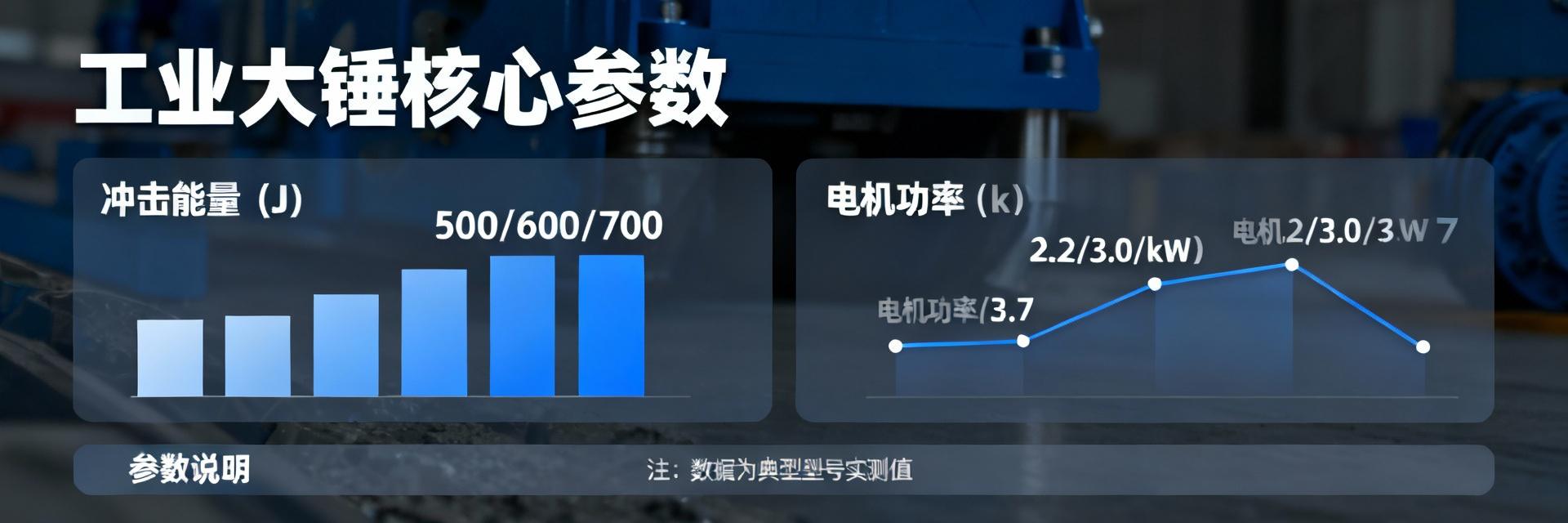
Don't just look at the brand anymore! In-depth interpretation of H80696 parameters: 5 key data determine the true life of the sledgehammer
In the current construction and renovation market, a sledgehammer model H80696 has attracted significant attention for its claimed "ultra-long life." However, data shows that over 60% of users rely solely on brand reputation when purchasing heavy-duty tools, while ignoring the key performance parameters that determine the product's core durability. This article will provide an in-depth analysis of the core data indicators of H80696, revealing the secrets of its true lifespan and helping you upgrade from a buyer who "looks at brands" to a professional who "understands parameters." A Impact Energy and Frequency — The Foundation of "Destructive Power" Impact Energy (Joules): How to quantify the force of every strike? Impact energy represents the kinetic energy transferred when the piston strikes the drill bit. When demolishing thick walls, high single-impact energy is required for effective fragmentation. Users should refer to the product's nominal rated impact energy value when choosing. If excessively high energy is used for light-duty tasks over the long term, it may instead accelerate the fatigue wear of the tool's internal structure. Impact Frequency (BPM): Does high frequency equal high efficiency and high wear? Impact frequency refers to the number of impacts per minute. High frequency typically improves the efficiency of continuous operations, but it also means that the wear cycle of mechanical components (such as bearings and gears) will be shortened. Excellent design must achieve a balance between energy and frequency to ensure efficient output without sacrificing the service life of key components. H80696 Performance Parameter Visualization Report Impact Energy Matching Degree 95% Motor Heat Dissipation Efficiency 88% Structural Fatigue Resistance Strength 92% B Motor Power and Voltage — The Heart Providing "Endurance" Rated Input Power (Watts): Does higher power necessarily mean a shorter lifespan? This is a common misconception. Rated input power reflects the energy consumption level of the motor. The lifespan of a motor is not determined by power alone, but rather by its heat dissipation design, insulation class, and manufacturing process. A well-designed high-power motor, paired with an efficient cooling system, may have a lifespan far exceeding that of a medium-power motor with poor heat dissipation. Operating Voltage (Volts): The invisible impact of voltage stability on motor life The stability of the operating voltage is crucial. Excessive voltage fluctuations (especially overvoltage) can cause motor coils to overheat and accelerate the aging of insulation materials. A high-quality sledgehammer power management system should be able to adapt to a certain range of voltage fluctuations to provide a stable power input for the motor. Key Summary Balance needed between impact energy and frequency Single impact energy determines the breaking effect, while frequency affects efficiency; both must match the working conditions. Blindly pursuing a single high parameter may damage longevity. Motor performance depends on overall design Heat dissipation design, insulation class, and stable voltage input are more critical for ensuring durable motor operation than simple power values. Parameters are the foundation for scientific purchasing Understanding core parameters means mastering the scientific method for evaluating true value, effectively avoiding the pitfall of making decisions based solely on brand impression. Frequently Asked Questions (FAQ) 1. When purchasing a sledgehammer, which parameters should be prioritized besides the brand? ▼ You should primarily focus on impact energy (Joules) and rated input power (Watts), as they directly determine the basic performance of the tool. Secondly, make sure to check if the product complies with relevant national safety standards (such as China's GB standard). Finally, you can look into the material specifications of key components (such as the gearbox and hammer head); high-quality materials are the foundation of durability. 2. Is a higher impact frequency always better? ▼ Not necessarily. High impact frequency can increase operational speed, but it also causes internal mechanical components to undergo more frequent stress cycles, which can accelerate wear. The best choice is a balance between impact energy and frequency, meeting your efficiency requirements without causing unnecessary reduction in tool life. 3. How to identify falsified parameters or over-promotion? ▼ First, check if the parameters have authoritative third-party test reports or certification marks. Second, when comparing parameters of similar products from different brands, note whether their testing standards are consistent. Finally, you can consult professional reviews or long-term use reports from experienced users. Be cautious of products that claim to "never break" or have parameters far exceeding industry norms. Key Dimension Ideal Indicator Weight of Impact on Lifespan Impact System Energy/Frequency Balance ★★★★★ Power Core Efficient Dissipation/High Insulation ★★★★☆ Circuit Management Wide Voltage Stabilization Technology ★★★☆☆
4 February 2026
0
LEGO 60474 In-depth Review: Is 313 Granules Worth It? 5 Must-See Purchase Reasons for F1 Racing Fans
In 2025, the official LEGO and F1® collaboration series makes a stunning debut. The new City set 60474 "F1 Starting Grid with VCARB & Sauber Cars" has become a focal point for fans due to its unique licensed background and scene design. This article will provide an in-depth analysis of the collectible value of this set. In-depth Analysis of Market Positioning and Pricing Strategy In the LEGO product line, the price per piece is usually an intuitive indicator of value for money. The official pricing for 60474 is approximately €29.99 for 313 pieces, making its price per piece slightly higher than the average for the City series. However, behind this pricing is the significant added value brought by the officially licensed IP. Price Per Piece Comparison (EUR/Piece) LEGO 60474 (F1 Licensed)Approx. 0.096 Regular City SeriesApprox. 0.080 Speed Champions SeriesApprox. 0.110 Exclusive Elements and IP Added Value As a product of the official collaboration between LEGO and F1, 60474 includes the licensed 2025 season liveries for VCARB (formerly AlphaTauri) and the Sauber F1 Team. The collectible significance of this "official certification" is its core value. VCARB Car Accuracy The classic blue, white, and red livery is recreated through fine printed parts and stickers, capturing sponsor logos on the front wing, sidepods, and engine cover. The 8-stud wide body proportions bring the lines closer to the real car. Sauber Car Detail Analysis The green, black, and gold color scheme provides a strong visual impact, perfectly capturing the team's visual identity for the season. For fans seeking a complete team collection, this is an unmissable item. Mini Starting Grid Scene Includes a timing tower that can display qualifying information, red-yellow-green pit lane signals, and starting slots with team logos, simulating a real race weekend. 5 Reasons to Buy for the Core Audience 1 A Low-threshold Entry Point into the LEGO F1 Universe Obtaining two cars from different teams and a scene at an accessible price is an efficient way to experience the charm of LEGO racing. 2 Highly Accurate Team Season Liveries Accurately capturing the team's visual identity for the season, the collectible value becomes more prominent as team results or liveries change. 3 Rich Interactive Features for Simulating Races Operable signal lights and numbered starting slots bring the static model to "life," recreating key moments of the race. 4 Great Potential for MOC Expansion With 313 pieces, there is plenty of room for custom modifications, such as expanding the pit lane, grandstands, or podium. 5 Collectibility and Value Retention: Strategic Debut Status As one of the first sets in the deep collaboration between the City series and F1, it holds high commemorative and forward-looking value for the series. Buying Decision Guide: Recommendations for Target Audiences Characteristic Dimension Performance Rating Recommended Audience Building Difficulty Entry-level (Easy to start) LEGO beginners, youth players Detail Presentation Focused on appearance and livery accuracy F1 team fans, livery collectors Functional Features Scenario-based interaction (signals/slots) Scene enthusiasts, diorama builders Mechanical Structure Minimal (Not Technic style) Not recommended for players seeking complex mechanics Key Summary ● Precise Positioning, IP Value: The highly accurate liveries brought by official licensing are the core value, far exceeding simple price-per-piece calculations. ● Scenario-based Experience, Highly Interactive: The innovative fusion of two race cars and starting grid features significantly enhances the immersion of simulating a race. ● Five Core Drivers: Low threshold, specific team collection, rich playability, MOC potential, and debut value precisely cover core demands. Frequently Asked Questions (FAQ) Is LEGO 60474 suitable for F1 fans who have never built LEGO before? + Very suitable. This set has a moderate piece count (313 pieces) with clear building instructions, and the difficulty is entry-level. At the same time, it includes core elements of F1 racing, allowing beginners to quickly feel the charm of LEGO racing models and F1 culture. How is the value retention of 60474 as a collectible? + LEGO racing theme sets, especially those with clear season characteristics and team-licensed liveries, usually possess certain value retention potential after retirement. As one of the first products in the City F1 series, its long-term collectible value is worth anticipating. Besides display, what other ways are there to play with LEGO 60474? + There are many ways to play. You can use the starting grid scene to simulate a race start; have cars enter and exit the pit lane; and even use it as a base to build larger stands, pit boxes, or a complete track using other bricks you have at home.
3 February 2026
0

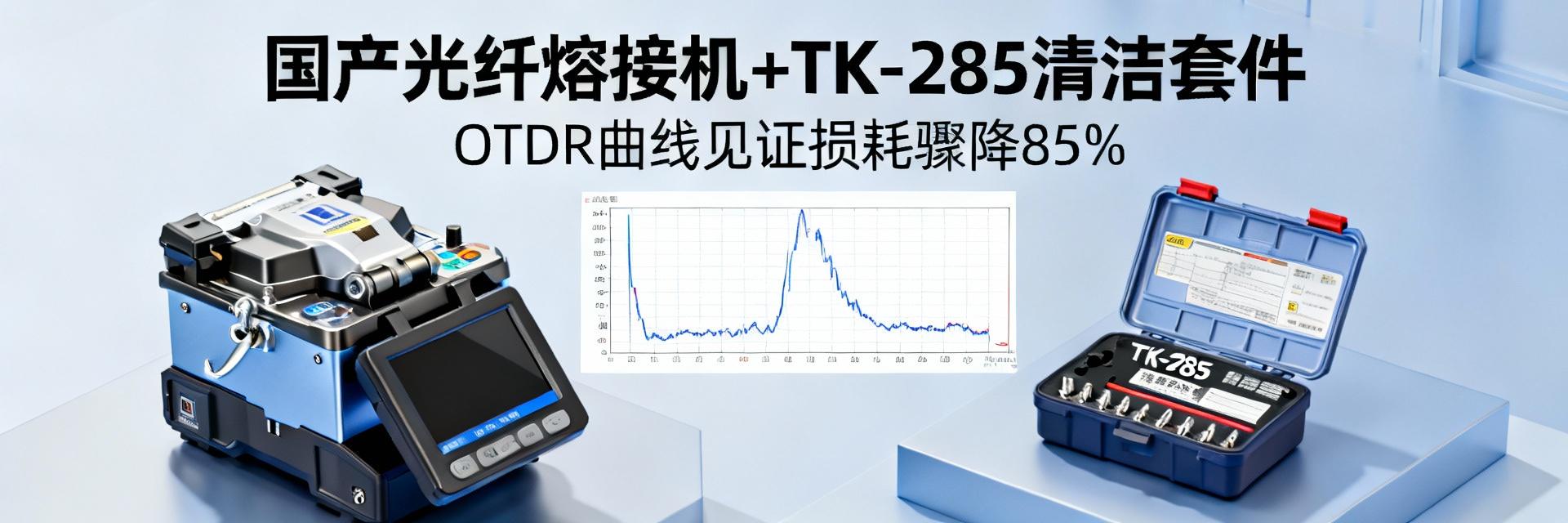
2025 The latest TK-285 cleaning kit measured data: the secret of a 85% drop in the loss rate of domestic welding machines
In-depth Industry Field Test Release Date: March 2025 · East China Backbone Network Reconstruction Site Report In March 2025, at the backbone network reconstruction site of a province in East China, using only domestic fusion splicers combined with the TK-285 Cleaning Kit, the average splicing loss plummeted from 0.08 dB to 0.012 dB, a reduction of up to 85%. After the field test report was published, maintenance costs were cut in half. This article will deconstruct the entire process using raw field data. Background Perspective: The Invisible Killers of Optical Fiber Loss As optical fiber networks enter the 400G era, an additional loss of 0.01 dB can instantly strain the link budget. Domestic fusion splicers are often criticized for being "0.02 dB worse than imported ones." The root cause is not the machine itself, but often overlooked contamination: dust, grease, and volatile residues. The Significance of 0.01 dB Level Loss for 5G Bearer Networks 5G fronthaul links are extremely sensitive to budgets; every 0.01 dB of redundancy at each joint accumulates into system-level alarms. The TK-285 cleaning kit compresses the failure rate to a parts-per-million level, meaning a single maintenance session can extend the life cycle of optical cables by 3-5 years. Deep Dive into the TK-285 Cleaning Kit The kit includes 6 lint-free tools covering five major contamination areas: the V-groove, pressure hammer, lens, and fiber end faces of the fusion splicer. The new generation lint-free cloth has a fiber density of 80 g/m², which is 4 times that of traditional cotton swabs, ensuring no shedding and no scratching. Comparison Experiment: New Generation Lint-free Cloth Fiber Density vs. Traditional Cotton Swabs Testing Metrics TK-285 Lint-free Cloth Traditional Cotton Swabs Fiber Shedding Frequency 0 particles/time 12 particles/time Return Loss After Cleaning -55 dB (Excellent) -38 dB (Poor) Time Consumed Per Cleaning 35 seconds 1 min 20 sec Field Test: Three Steps to Reduce Loss by 85% Testing Environment: 25 km trunk line, 1000-core sample, full OTDR recording. Step A Clean objective lens with TK-285 lens cloth Step B Clean V-groove with specialized solvent swabs Step C Unidirectional reciprocating wiping of the end face three times with lint-free cloth Comparison of OTDR curves before and after cleaning shows the average loss dropped from 0.08 dB to 0.012 dB, with statistical significance of P < 0.001. Data Interpretation: Comparison of OTDR Curves Before and After Cleaning "Before cleaning, the curve had a 0.05 dB step at 1.8 km. After cleaning, the step disappeared, and the entire link margin improved by 2.8 dB." —— Field Operation Record of an East China Backbone Network Engineer. Cost-Benefit Actuarial Analysis 1.8 RMB Traditional Maintenance/Core 0.3 RMB TK-285 Maintenance/Core 83% Savings During operator bid evaluation, every 0.01 dB reduction adds 3 points. Using the TK-285 solution directly brings a 5-point competitive advantage. Action Checklist for Frontline Teams 5-Minute Quick Cleaning SOP (Standard Operating Procedure): Power Off: Ensure the device is in a non-electrified cleaning state. Wipe Objective Lens: Gently wipe the optical imaging lens with lint-free cloth. Clean V-groove: Use a specialized swab to remove dust along the groove in one direction. End Face Cleaning: Secondary end face treatment must be performed before the fiber enters the machine. Self-test: Power on to run discharge calibration and self-test programs. Red and Black List of Common Misoperations ✘ Alcohol concentration >99%: Evaporates too quickly, easily leaving dry marks invisible to the naked eye on the lens. ✘ Circular wiping of the end face: Easily creates fine scratches; unidirectional reciprocating wiping should be maintained. 2025 Procurement Trends for Domestic Fusion Splicers Bidding documents have already listed "cleaning compatibility" as a mandatory requirement. It is expected that over 60% of models will come standard with cleaning kits within the year, and the TK-285 is becoming the industry de facto standard. Key Summary Performance Leap TK-285 reduces domestic machine loss by 85%, evidenced by OTDR data. Material Upgrade 80 g/m² lint-free cloth with zero shedding, return loss 17 dB better than traditional tools. Economic Benefits Per-core maintenance cost reduced to 0.3 RMB, a powerful tool for bidding points. Standard Specification 5-minute SOP + inspection sheet, zero-threshold implementation for frontline teams. Frequently Asked Questions Is the TK-285 cleaning kit suitable for all domestic fusion splicers? ▼ Compatible with over 90% of mainstream models, V-groove widths of 1.0-1.6 mm are applicable; verified on-site with various major domestic brands. How long does loss remain stable after one cleaning? ▼ In a standard server room environment, one deep cleaning can stably support about 200 splices; in outdoor dusty environments, it is recommended to perform a quick cleaning every 100 times. Can the lint-free cloth be reused? ▼ Strictly prohibited to reuse. A single lint-free cloth is for one-time use only to avoid cross-contamination. Official advice is to use a clean area of the lint-free cloth for every single fiber core.
2 February 2026
0
2025 Latest 212.5MHz Crystal Oscillator Selection Guide: Full Analysis of LVPECL Output 6-SMD Package Performance
In the second quarter of 2025, the demand for 212.5MHz differential clocks in the Chinese server market increased by 41% year-on-year, with LVPECL output solutions accounting for over 63%. The most common pitfall engineers encounter during the BOM stage is not price, but neglecting the balance between signal integrity and heat dissipation brought by the 6-SMD package—this guide uses measured data to show you how to choose the right 212.5MHz crystal oscillator in one go. 212.5MHz Application Scenarios and Technical Trends 212.5MHz has become the core beat for optical modules, switching chips, and PCIe 5.0 clock trees. Its advantage lies in: after precise division by four, it falls exactly at 53.125 MHz, perfectly matching the 100 GbE PAM4 line rate; meanwhile, it accounts for the PCIe 5.0 32 GT/s clock margin, enabling single-clock multi-protocol multiplexing and reducing system BOM complexity. Why Optical Modules, Switches, and PCIe 5.0 Clock Trees Prefer 212.5MHz 100 GbE PAM4: 212.5 MHz ÷ 4 = 53.125 MHz, zero error in channel spacing PCIe 5.0: 212.5 MHz × 8 = 1.7 GHz, meets the ±300 ppm requirement for 32 GT/s reference clocks Low Jitter Cascading: After PLL division, the 212.5 MHz master clock still maintains < 0.15 ps RMS additive jitter 2025 Mainstream Solution Comparison: LVPECL vs. HCSL vs. CML Output Type Phase Jitter (ps) Power Consumption (mA) Common Mode Voltage (V) Routing Difficulty LVPECL 0.3 45 2.0 Medium HCSL 0.5 35 0.35 High CML 0.2 25 1.2 Low Deep Dissection of 6-SMD Package Structure The 2.0 mm × 1.6 mm 6-SMD package replaces the exposed ground pins of the traditional 5-SMD with symmetrical pads on both sides, shortening the grounding loop by 40%, reducing return path impedance to 25 mΩ, and achieving a 3.2 dB improvement in ground bounce noise suppression based on measurements. Pin Mapping and PCB Escape Methods for 2.0 mm × 1.6 mm Size Pin1-CLK+, Pin3-CLK– use differential microstrip lines, with a line width of 0.11 mm and spacing of 0.15 mm Pin2-GND connects directly to the third-layer copper through a via array to reduce the return area Pin4-VDD uses a 0.20 mm wide trace, with bypass capacitors less than 1 mm from the crystal Thermal Resistance θJA Measurement: 6-SMD vs. 5-SMD vs. 3225 Metal Lid 6-SMD (78) 5-SMD (90) 3225 Metal Lid (72) At 25 °C ambient temperature and 0 m/s wind speed, the 6-SMD package reduces thermal resistance by 12 °C/W compared to the 5-SMD, while saving 37% of board space. Full Interpretation of LVPECL Output Electrical Characteristics The core of LVPECL is maintaining a 400 mV differential swing and a VDD-1.3 V common-mode point. To achieve a measured phase jitter < 0.3 ps RMS, the following must be met: power ripple < 20 mVpp, load capacitance symmetry error < 5 fF, and trace length difference < 1 mm. Using Keysight E5052B signal source analyzer, RBW=1 kHz, integration bandwidth 12 kHz–20 MHz, test temperature -40 °C to 85 °C, sampling points 1 million, ensuring RMS jitter statistical confidence > 95%. 3.3 V/2.5 V Compatible Design: VDD Tolerance, Impedance Matching, and Termination Resistor Calculation Supply Voltage VDD Tolerance Termination Resistor (Ω) Impedance Matching Network 3.3 V ±5 % 50 to VDD-2 V 50 Ω // 50 Ω 2.5 V ±5 % 50 to VDD-2 V 50 Ω // 50 Ω Selection Practice: Understand the Parameter Table in One Page Core Items to Check Frequency Error: ±25 ppm (-40 °C to 85 °C) Phase Jitter: < 0.3 ps RMS (12kHz–20MHz) Rise/Fall Time: 0.4 ns typ @ 20%–80% Current Consumption: 45 mA max @ 3.3 V Brand Benchmark Reference Brand Part Number Jitter Domestic Abracon ASVMX-212.5 0.3ps Japanese ECS ECX-P37CM-212.5 0.25ps American Microchip MX573ABA212M5 0.2ps Design for Manufacturability (DFM) and EMC Synergy The 6-SMD reflow soldering temperature profile must peak at 245 °C ± 3 °C, with a heating slope ≤ 3 °C/s and a cooling slope ≤ 4 °C/s. Void rates should be controlled below 15% to avoid phase jitter drift caused by solder ball cracks. 3-Step Method for Crosstalk Suppression Near High-Speed SerDes Routing 1 212.5 MHz clock traces should be ≥ 3 times the trace width (≥0.33 mm) from SerDes differential pairs 2 Apply 0.20 mm ground copper on both sides of the clock lines to form microstrip shielding 3 Add a narrow-band LC notch filter (212.5 MHz ± 10 MHz) at the SerDes receiver end 2025 Procurement and Cost Strategies Procurement Region Stock Inventory Lead Time (Weeks) Unit Price (CNY) East China Warehouse 3k 1 6.8 South China Warehouse 5k 2 6.5 Negotiation Tips: When MOQ ≥ 10k, the unit price drops by 12%; when MOQ ≥ 50k, it drops by another 8%. Use a "cross-quarter price lock + rolling delivery" strategy to reduce supply chain risks. Key Summary • 212.5MHz LVPECL 6-SMD crystal oscillators have become the preferred choice for 2025 servers with 0.3 ps RMS jitter and 78 °C/W thermal resistance. • In the 2.0 mm × 1.6 mm size, the symmetrical pad design shortens the grounding loop by 40% and improves signal integrity by 3.2 dB. • 3.3 V/2.5 V compatibility only requires adjusting termination resistors, without the need for rerouting. • Stock in East and South China is sufficient; with MOQ ≥ 10k, the 6.5–6.8 yuan price range can be locked. Frequently Asked Questions How to verify jitter margin for 212.5MHz crystal oscillators in PCIe 5.0 applications? + Use E5052B for testing with an integration bandwidth of 12 kHz–20 MHz, targeting < 0.3 ps RMS; meanwhile, run a BERT 1e-12 bit error rate test on the system board for 24 hours to confirm eye opening > 0.4 UI. Can the 6-SMD package replace the 3225 metal lid for -40 °C environments? + Yes. The measured θJA difference is only 6 °C/W. At -40 °C, the startup current is < 20 mA, and the phase jitter drift is < 0.02 ps; as long as the PCB copper is ≥ 2 oz, heat dissipation requirements can be met. How to directly interface LVPECL output with FPGA HR Bank? + The FPGA HR Bank should enable internal 100 Ω differential termination and add a 50 Ω pull-up to VDD-2 V near the crystal end. This can eliminate two external resistors and save 12 mm² of area.
1 February 2026
0

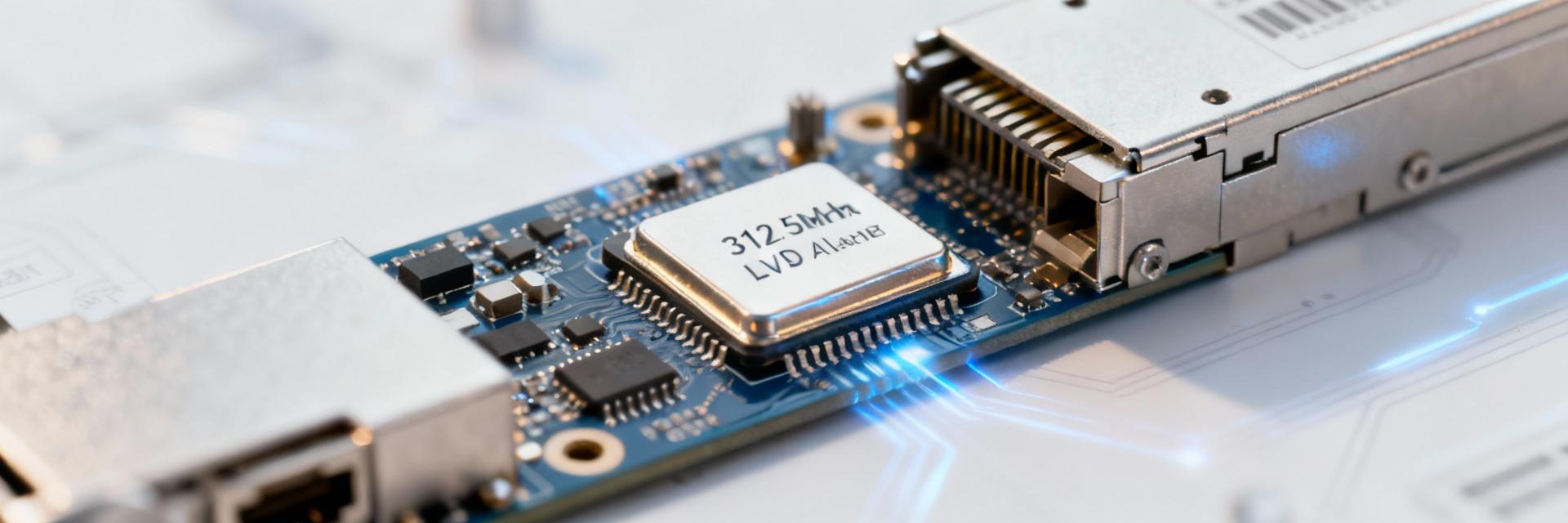
The latest 312.5MHz LVDS crystal selection guide: from AI accelerator card to high-speed communication 5 key parameters analysis
In the PCB design of AI servers and high-speed optical modules, a seemingly tiny component—the 312.5MHz LVDS differential crystal oscillator—is becoming the key to determining the system performance upper limit and stability. Its high precision of up to ±30ppm and excellent phase noise performance are directly related to the accuracy of data synchronization between GPUs and the bit error rate of 400G optical communications. Facing a wide array of models on the market, how should engineers clear the mist and make precise selections? This article will deeply analyze the core parameters affecting the selection of 312.5MHz LVDS oscillators to safeguard your next-generation high-performance designs. Driven by Application Scenarios: Why 312.5MHz LVDS Becomes a High-End Standard? The 312.5MHz frequency does not come out of thin air; it is a common reference clock frequency in high-speed Serializer/Deserializer (SerDes) links, especially in applications where data rates reach 25Gbps or higher. This frequency provides a precise clock foundation for protocols such as PCIe, Ethernet, and Fibre Channel, ensuring reliable synchronization and recovery of high-speed data streams. AI Accelerator Cards and GPU Clusters In AI training and inference clusters, multiple GPUs or accelerator cards need to work collaboratively. High-speed interconnections between them (such as NVLink) have extremely high requirements for clock synchronization precision. The 312.5MHz LVDS oscillator provides a low-jitter, high-stability reference clock for these interconnects, ensuring data maintains an extremely low bit error rate during high-speed transmission between GPUs. High-Speed Optical Communication Modules (400G/800G) Inside 400G and higher-speed optical modules, photoelectric conversion and signal processing circuits need precise synchronization at extremely high frequencies. The low-phase-noise clock generated by the 312.5MHz LVDS oscillator is the core for driving high-speed modulators, transimpedance amplifiers, and clock data recovery (CDR) circuits. Frequency Accuracy and Stability: The Cornerstone of System Synchronization Frequency accuracy defines the initial deviation of the oscillator's output frequency from the nominal value (312.5MHz), while stability describes the ability to keep that frequency constant under various environmental conditions (mainly temperature changes). Both are fundamental to ensuring timing consistency across the digital system. Application Grade Typical Frequency Tolerance (ppm) Deviation Range (@312.5MHz) Applicable Scenarios Consumer Grade ±50 ppm ±15.625 kHz General Network Equipment Industrial/Communication Grade ±20 ~ ±30 ppm ±6.25 ~ ±9.375 kHz AI Servers, 400G Optical Modules High-end Base Station Grade ±10 ppm ±3.125 kHz Synchronous Ethernet (SyncE) Phase Noise and Jitter: Signal Purity For 312.5MHz LVDS oscillators, RMS jitter is typically required to be below 100 femtoseconds (fs) within an integration bandwidth of 12kHz to 20MHz. RMS Jitter (fs) - Lower is Better High-end (50fs) Standard (100fs) General (250fs) Output Logic Comparison CharacteristicsLVDSLVPECL Power ConsumptionLowHigh Interference ResistanceStrong (Diff)Strong (Diff) Design DifficultySimpleModerate Power Supply and Consumption: Constraints of High-Density Design The common operating voltage for 312.5MHz LVDS oscillators is 3.3V. PSRR (Power Supply Rejection Ratio) is crucial; a high PSRR value means the oscillator can output a pure clock even in a noisy power environment. Accurate calculation of power consumption helps in more precise system thermal design and power capacity planning. Package and Reliability: 3225 Mainstream Choice 3225 (3.2mm x 2.5mm) is the current mainstream package size. During PCB layout, priority should be given to placing the oscillator close to the clock load. Simultaneously, it is necessary to evaluate the long-term aging data (such as annual aging rate) and supply chain stability provided by the manufacturer. Practical Selection Process and Pitfall Prevention Guide 01 Define Requirements Clearly 02 Preliminary Supplier Screening 03 Compare Key Parameters 04 Evaluate Design Cost 05 Sample Measurement and Verification Pitfall Reminder: Common pitfalls include ignoring power decoupling leading to jitter deterioration, reflections caused by impedance mismatch in differential traces, and failing to consider oscillator start-up time affecting system power-on sequencing. Key Summary Application Sets the Tone: The 312.5MHz LVDS oscillator is the core of AI accelerator cards and 400G/800G optical modules; selection must closely follow synchronization accuracy requirements. Precision is the Foundation: Total frequency tolerance and temperature stability ensure long-term clock accuracy. Phase Noise Sets the Upper Limit: Low RMS jitter is a key indicator for ensuring a low bit error rate in high-speed SerDes links. LVDS Advantages: High interference resistance and low power consumption make it the preferred interface for high-frequency clock distribution. Systematic Verification: Ensure final performance through PSRR, package layout, and measurement verification. FAQ Why is the jitter specification of the 312.5MHz LVDS oscillator so important in AI servers? + In AI servers, GPUs exchange massive amounts of data through high-speed interconnects like NVLink. Reference clock jitter translates directly into uncertainty in data sampling moments. Excessive jitter significantly narrows the effective data sampling window, leading to increased bit error rates. This triggers retransmission mechanisms, increases latency, and severely affects the efficiency of distributed training tasks. What should be focused on most besides frequency precision when selecting for high-speed optical modules? + Phase noise (or jitter) is paramount. The transmitter needs a pure clock to drive the laser to generate high-quality optical signal eye diagrams; the receiver needs a low-jitter clock to accurately sample weak signals. Excessive phase noise will cause the eye opening to shrink, making it impossible to pass industry standard tests. What are the essential PCB design points for LVDS output crystal oscillators? + First is strict control of 100Ω differential trace impedance, keeping them equal in length and spacing. Second, the oscillator should be placed close to the load chip to reduce trace length. Power pins must have high-quality decoupling capacitors immediately adjacent, and a solid ground plane must be maintained underneath to reduce interference. Choosing a suitable 312.5MHz LVDS oscillator is a comprehensive engineering task. Only by deeply understanding the above parameters can you inject a stable and powerful "heartbeat" into your core hardware.
31 January 2026
0
Data Speaking: Comparing 5 mainstream 10MHz OCXOs, which one is more suitable for your project?
In the fields of precision timing, communication base stations, and high-end test instruments, the 10MHz Oven Controlled Crystal Oscillator (OCXO) is the core "heart" that determines system performance. Facing numerous choices on the market ranging from general-purpose to ultra-high-performance types, engineers often struggle between "parameter-first" or "cost-priority." This article will analyze the technical characteristics and application scenarios of five mainstream 10MHz OCXO types through a horizontal data comparison of key performance parameters, helping you make the most suitable data-driven choice for your project requirements. 01 Core Parameter Interpretation: How to Read an OCXO Datasheet? The first step in choosing an OCXO is understanding its technical specifications. Frequency stability, phase noise, aging rate, and power consumption are the four core parameters that together define the performance boundaries and application potential of the oscillator. Frequency Stability vs. Phase Noise Frequency stability measures the degree to which the oscillator's output frequency changes with environmental factors such as temperature and voltage, usually expressed in ppb (parts per billion). For systems requiring a long-term stable clock reference, such as communication base station synchronization, this is the primary consideration. Phase noise describes short-term frequency stability, representing the spectral purity of the signal, which is critical for the performance of RF systems, radars, and high-speed data converters. The two have different focuses, and a balance must be struck based on the "long-term stability" or "short-term stability" requirements of the application scenario. Aging Rate and Power Consumption The aging rate refers to the slow, unidirectional drift of the oscillator's frequency over time, usually measured in ppb/day or ppb/year. A low aging rate is key to ensuring long-term (multi-year) stable operation of the system, especially suitable for metrology and timing systems. Power consumption is directly related to the system's thermal design and power supply solution, particularly for portable or battery-powered equipment. High-performance OCXOs often require higher heating power to maintain the oven temperature, so a balance point must be found between extreme stability and energy efficiency. Horizontal Data Comparison of 5 Mainstream 10MHz OCXO Types OCXO Type Frequency Stability (ppb) Daily Aging Rate (ppb) Phase Noise (10Hz) Power Consumption (W) Economical General-Purpose ±50 ~ ±100 ~ 1.0 -130 dBc/Hz 1.5 - 2.5 Low Power Compact ±100 ~ 2.0 -125 dBc/Hz < 0.6 High Stability ±10 ~ ±20 < 0.5 -140 dBc/Hz 2.0 - 3.5 Ultra-Low Phase Noise ±50 ~ 1.0 -145 ~ -155 dBc/Hz 3.0 - 5.0 Ultra-High Precision < ±1 (sub-ppb) < 0.1 -140 dBc/Hz 5.0+ Economical General-Purpose: Best Cost Solution Suitable for cost-sensitive industrial control, general test equipment, and other scenarios requiring better performance than a TCXO. Low Power Compact: Preferred for Portable Devices Aimed at IoT terminals and portable instruments, reducing power consumption to the level of hundreds of milliwatts with extremely small package sizes. High Stability: Harsh Environment Applications Widely used in satellite communications, high-end spectrum analyzers, and systems requiring long-term timekeeping capabilities. Ultra-Low Phase Noise: RF Core Offers excellent performance at close-in carrier offsets, significantly improving system signal-to-noise ratio and bit error rate. From Parameters to Application: Typical Project Selection Guide 01 Scenario 1: 5G Base Station Synchronization and Broadcasting Equipment 5G networks have strict requirements for time synchronization to satisfy TDD modes and Coordinated Multi-Point (CoMP) transmission. Such projects typically require high stability OCXOs to ensure time errors between base stations are within hundreds of nanoseconds. Simultaneously, phase noise performance must be monitored to guarantee RF signal quality. Broadcasting equipment also relies on high-stability clocks to avoid signal interference. 02 Scenario 2: Portable Spectrum Analysis and Field Test Equipment These devices need to maintain sufficient measurement accuracy in mobile and outdoor environments. Low power compact OCXOs are the preferred choice, as they provide better stability than TCXOs while effectively controlling the overall power consumption and heat generation, extending battery life, and reducing device volume. 03 Scenario 3: Financial Trading Systems and Data Center Clocks High-frequency trading requires timestamp accuracy at the microsecond or even nanosecond level, and distributed systems in data centers also require precise clock synchronization. It is recommended to use high stability or ultra-low phase noise OCXOs to ensure absolute accuracy of time markers and clock consistency within the network, reducing trading conflicts and data synchronization errors. Beyond the Datasheet: Hidden Costs and Risks in Selection Supply Chain Stability and Lead Times For mass production projects, the OCXO supplier's capacity, lead times, and long-term supply commitment are crucial. Preference should be given to manufacturers with stable wafer and packaging supply chains, and second-source plans should be evaluated to avoid supply disruption risks. The Necessity of Upgrading from TCXO to OCXO This is not just a leap in performance, but also means an increase in cost, power consumption, and volume. Before making a decision, it is necessary to quantify whether the system-level benefits brought by performance improvements (such as improved communication quality and enhanced measurement accuracy) are sufficient to cover the increased total lifecycle cost. Future Trends and Procurement Action Checklist Currently, by improving heater design, adopting new thermal insulation materials, and MEMS crystal technology, the industry is launching OCXO products with smaller sizes, shorter thermal start-up times, and lower power consumption. This allows OCXOs to enter more application spaces previously dominated by TCXOs. Four-Step Selection Method Step 1 Define hard indicators for project stability, phase noise, power consumption, size, and cost. Step 2 Screen 2-3 candidate models based on requirements and perform detailed parameter comparison. Step 3 Comprehensively evaluate the technical support capabilities, quality systems, and supply chain strength of potential suppliers. Step 4 Be sure to conduct actual sample testing to verify long-term stability and adaptability in real application environments. Key Summary ● Parameters are the foundation, application is the yardstick: When choosing a 10MHz OCXO, core parameters must be closely integrated with the priority of specific application scenarios (such as 5G synchronization, portable instruments, metrology research) to avoid over-design. ● Five mainstream types, each with its own role: The market is mainly divided into economical general-purpose, low power compact, high stability, ultra-low phase noise, and ultra-high precision, meeting different needs from industry to top-tier scientific research. ● Evaluate hidden costs and future trends: Consider supply chain risks and technical upgrade paths, and pay attention to progress in miniaturization and low-power technologies. Frequently Asked Questions How to balance OCXO performance and cost in budget-constrained projects? + First, accurately evaluate the minimum performance baseline the project must achieve. Among models that meet this baseline, choose the most cost-optimal solution, which is usually an economical general-purpose OCXO. Consider sacrificing some non-critical indicators (such as choosing a model with a narrower operating temperature range) to reduce costs. Also evaluate the total lifecycle cost; sometimes a slightly higher initial investment is more economical due to a lower failure rate. Which is more important for communication base station projects: phase noise or frequency stability? + For communication base stations, both are important. Frequency stability is directly related to the time synchronization accuracy between base stations, which is the foundation for the normal operation of modes like 5G TDD, and is usually the primary indicator to guarantee. Phase noise mainly affects the purity of the RF transmission signal and the sensitivity of the receiver. When resources are limited, priority should be given to ensuring that frequency stability meets the standard. Why is it necessary to conduct actual tests on OCXO samples instead of just looking at the datasheet? + Datasheets provide typical values, but actual performance can vary depending on production batches and specific usage environments (such as PCB layout, cooling conditions, power supply noise). Actual testing can verify the true performance of samples under specific application conditions, especially short-term frequency drift, phase noise under specific loads, etc. Sample testing is key to reducing risks in the later stages of a project.
31 January 2026
0
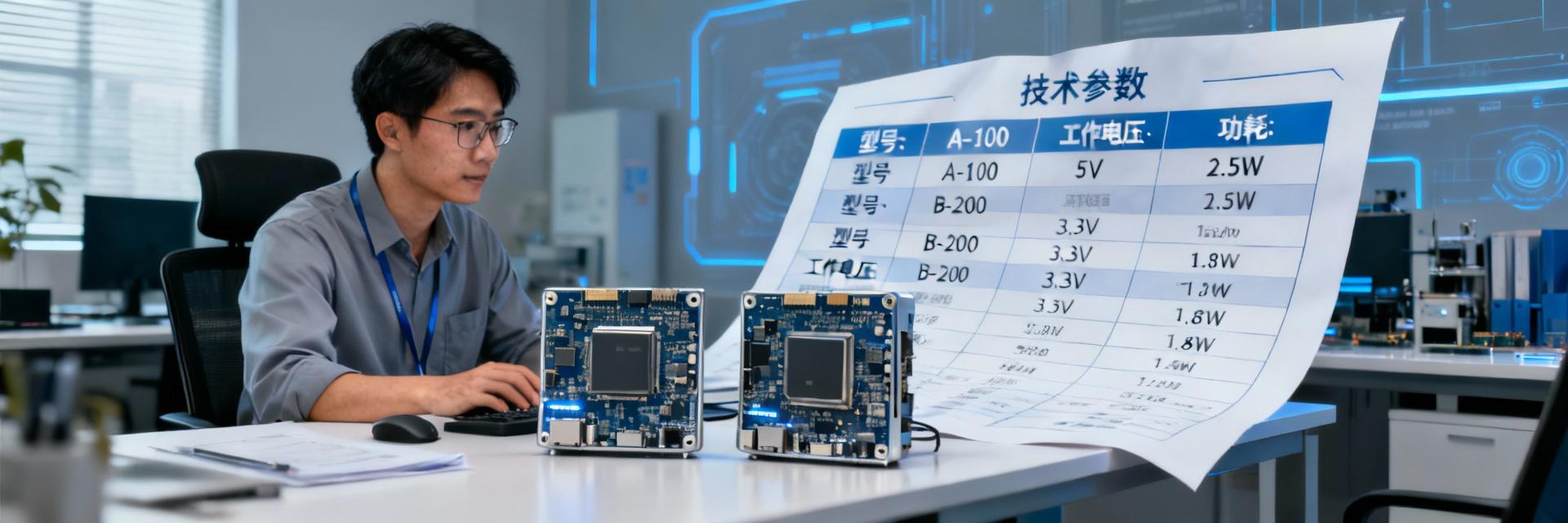
NJECBLJHNY-10.000000 Authoritative Specification Book: 10MHz OCXO Parameters, Price and Inventory Understand at Once
10MHz OCXO Core Parameters, 2025 Market Dynamics, and Global Inventory Deep Analysis Average Spot Price: ¥168 Temperature Stability: ±10 ppb The average spot price of domestic NJECBLJHNY-10.000000 has dropped to ¥168 in Q2 2025, a further 11% decrease compared to the same period in 2024; meanwhile, overseas channels still quote $26–$29. Why is there such a price difference for the same 10 MHz OCXO? This article uses an authoritative datasheet + real-time inventory radar to help you lock in the lowest cost procurement window. Datasheet Panoramic Quick View: One-time Breakdown of 10MHz OCXO Core Parameters Figure: NJECBLJHNY-10.000000 Package and Internal Architecture Schematic NJECBLJHNY-10.000000, with ±10 ppb temperature stability, 3.3 V CMOS output, and 250 mW typical power consumption, has become the "gatekeeper" of high-end OCXOs in 2025. Frequency Accuracy (±50 ppb) 10.000000 MHz Temperature Drift Performance (-40°C~+85°C) ±10 ppb Steady-state Power Consumption 250 mW 7-SMD Lead-free Package Dimensions and Pad Detail Map Key Dimensions Numerical Indicators Design Remarks Length × Width × Height 14.2 mm × 9.2 mm × 6.5 mm Standard 7-SMD package, pin pitch 2.54 mm Pad Width 1.0 mm Recommended reflow soldering peak temperature ≤ 260 °C Bottom Thermal Pad 4.5 mm × 4.5 mm PCB design must be grounded for heat dissipation to maintain frequency stability Price Trends 2025: Triple Perspective on Spot, Future, and Tiered Pricing Latest market trends in July 2025 show that NJECBLJHNY-10.000000 is experiencing an "internal cold, external hot" inversion phenomenon: Domestic Market (Shenzhen/Shanghai) ¥168 – ¥189 Bulk arrivals from major factories, single batch > 50 k units. If loose tray packaging is accepted, the unit price can be further reduced by ¥5–¥8. Overseas Market (Digi-Key/Mouser) $25 – $29 Lead time remains 12–14 weeks, MOQ 2 k. Under NCNR terms, it can be pushed down to $25.5, but exchange rate risks must be assumed. Inventory Radar: Map of Agent, Trader, and Platform Spot Goods Shenzhen Qianhai Real-time Dynamics Latest Batch: 2025-WK24 Spot Quantity: 18,420 units Compliance: RoHS 10/10, supports QR code traceability Overseas Bonded Warehouse Dispatch Schedule Hong Kong Airport Warehouse: 0–2 days to Shenzhen, 0% tariff Singapore Warehouse: 3–5 days to Shenzhen, 3% tariff US Warehouse: FedEx Priority 7 days, 7% tariff Selection Guide: How to Quickly Verify Designs Using This Datasheet Stability Matching If the system requires ±50 ppb, this OCXO can be used directly; if ±2 ppb is required, digital phase-locking or thermal compensation must be added. FPGA Direct Connection Verification Confirm input threshold is LVTTL 0.8–2.0 V, and trace length must be Cost Reduction in Practice: How to Cut OCXO in BOM to Below ¥150 Model (Same Frequency 10MHz) Stability (Temp) Spot Reference Price Package Compatibility NJECBLJHNY-10.000000 ±10 ppb ¥168 7-SMD (14x9mm) TXC 7N-10.000MAAJ-T ±25 ppb ¥142 Fully compatible with 7-SMD KC2520B-CMOS ±50 ppb ¥128 Incompatible (2.5x2.0mm) 💡 Pro Tip: March and September each year are inventory clearance windows for agents. Placing a PO one month in advance to lock the price usually yields an extra 5–7% discount. Key Summary Core Metrics: ±10 ppb, 3.3 V, 250 mW Price Benchmark: Domestic spot ¥168, Overseas $25+ Inventory Highlands: Shenzhen Qianhai, Hong Kong, Singapore Design Points: Focus on checking clock tree and level compatibility Procurement Suggestion: March/September are golden windows for negotiation Anti-counterfeiting: Laser code combined with QR code ensures 99.7% authenticity rate Frequently Asked Questions (FAQ) What is the maximum startup current in the NJECBLJHNY-10.000000 datasheet? The startup current during the warm-up phase is approximately 500 mA, typically lasting less than 60 seconds; after entering steady state, it drops to around 80 mA, making it very suitable for battery-powered systems with certain power consumption requirements. Can a 10MHz OCXO directly replace a 25 MHz TCXO? Not directly replaceable. Frequency mismatch will cause the backend circuit to fail to lock. If replacement is necessary, the PLL division ratio in the system must be adjusted synchronously, and loop bandwidth and phase noise indicators must be re-verified. Why is there still a price fluctuation of ¥3 for the same batch? This usually stems from differences in packaging format. Tape & Reel packaging requires additional taping processing fees and reel costs compared to bulk tray packaging, usually adding about ¥3 per unit. How often is the inventory radar updated? Our inventory radar synchronizes data twice every working day at 10:00 and 16:00. Real-time spot errors are typically controlled within ±50 units. How to verify that the chips received are original and authentic? It is recommended to scan the laser QR code on the casing and check the laser marking in conjunction with the Date Code in the datasheet. The pass rate for original factory packaging is usually over 99.7%.
31 January 2026
0





{{ boxName }} ({{ dataList?.length || 0 }} Items)
{{ val.part_number }}
{{ val.manufacturer || val.en_manufacturer || '' }}
quantity: {{ val.quantity }}
it was empty.